
Experts say ISKP’s quick assertion may be an operational shield to divert public anger away from the real perpetrators.
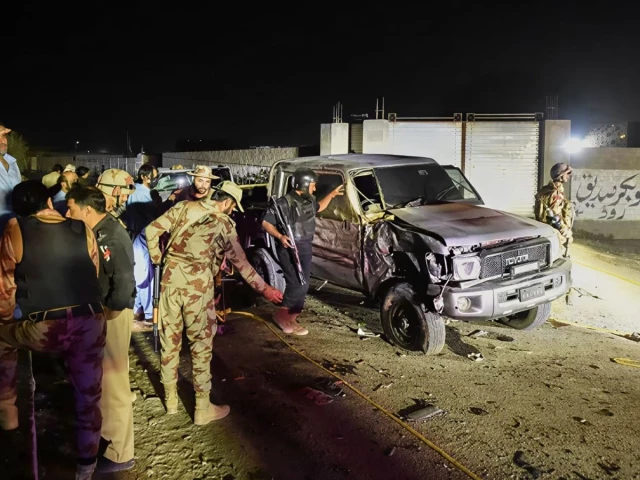
According to the DC, District and Sessions Judge Abdul Hakeem Kakar was traveling from Quetta to Mastung when unidentified assailants attacked his vehicle on the national highway. PHOTO: APP
Following the assassination of District and Sessions Judge Abdul Hakeem Kakar in Mastung, an attack that drew swift nationwide condemnation, security experts and analysts have unmasked a foreign-backed hybrid war strategy driven by the BLA-BYC nexus operating under their command in Delhi and Kabul.
Experts, who raise serious concerns about ISKP’s quick claim of responsibility, see the claim as an operational shield designed to divert public anger from the real perpetrators.
In the wake of this targeted attack on state institutions, analysts are expressing grave concern over international delays, directly asking when the UN Security Council will wake up to impose global sanctions against these foreign-backed terrorist networks and their external sponsors.
The targeted attack took place near the Wali Khan bypass junction while the bailiffs were traveling from Quetta to Mastung. Sessions Judge Kakar and his security guard died on the spot, while Additional Sessions Judge Tariq Lashari suffered serious injuries.
Security analysts see this targeted killing as an attempt to intimidate the judiciary, subvert the rule of law and force a withdrawal of state authority in Balochistan. Having failed to break the resolve of law enforcement agencies, banned insurgent groups have increasingly turned to judicial officials, prosecutors and civilian institutions.
Intelligence experts describe a distinct multi-layered tactic taking hold in the region as the BLA carries out physical ambushes, targeted assassinations and infrastructure destruction. The Baloch Yakjehti Committee (BYC) functions as an urban proxy: providing ideological messages, framing narrative coverage, and generating public sympathy to protect armed militants from accountability.
Read more: District judge and security guard killed in gun attack in Mastung, Balochistan
Transnational terrorist groups like ISKP intervene with rapid claims of responsibility hours after an attack to absorb public outrage and obscure the real operational hands.
Given the BLA’s geographic footprint and established presence in Mastung, intelligence analysts view ISKP’s opportunistic claims as part of an operational convergence designed to deflect reaction when civilian or judicial figures are targeted.
Security assessments point to external actors operating from Delhi and Kabul providing logistics, secure communication channels and financial backing to sustain the proxy war in Pakistan.
Given the nexus between insurgent ethnic groups and representatives of transnational terrorism, security analysts are calling on global counterterrorism bodies to act.
Experts urge international partners to examine these operational and financial networks under existing UN Security Council resolution frameworks.
They are also increasingly calling for sanctions against designated entities and their external financial backers to prevent further regional instability.
In statements issued separately, President Asif Ali Zardari, Prime Minister Shehbaz Sharif and Balochistan Chief Minister Mir Sarfraz Bugti reiterated that the State will not succumb to terrorist intimidation. Expressing national solidarity, Chief Justice of Pakistan Yahya Afridi postponed the National Conference on Judicial Welfare in solidarity with the martyred judge and the legal fraternity.
Security forces have intensified intelligence-based operations in and around Mastung, neutralizing multiple hostile fighters.
The Balochistan Bar Council announced a two-day province-wide judicial boycott and three days of official mourning, calling for increased security measures for judicial staff.


