
- New fast-charging electric vehicle battery announced
- Charge from 10% to 98% in just 6 minutes and 27 seconds
- Delivers high-speed charging in temperatures as low as -30°C (-22°F)
Sustainability Week 2026
This article is part of a series of sustainability-themed articles we are publishing to commemorate Earth Day 2026 and promote more sustainable practices. Check out all our Sustainability Week 2026 content.
Electric vehicle (EV) battery technology has taken another step forward with a new charging benchmark just set by a Chinese battery giant.
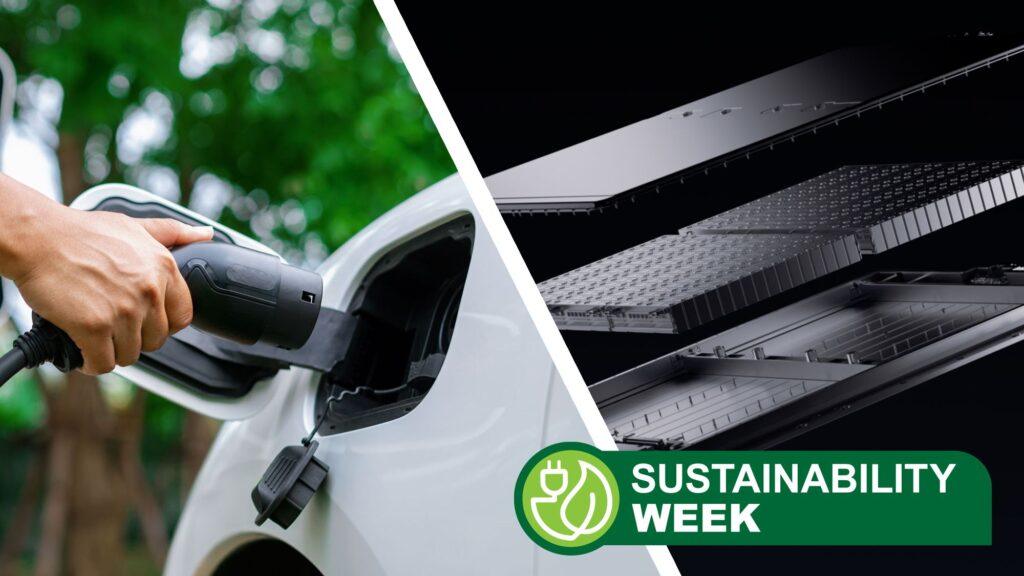
CATL, the market-leading electric vehicle battery manufacturer, has announced its third-generation Shenxing battery, which it claims can charge even faster than BYD’s recently announced and already impressive Blade 2.0 offering.
CATL says its new lithium iron phosphate (LFP) battery can be charged from 10% to 35% in one minute, from 10% to 80% in three minutes and 44 seconds, and from 10% to 98% in six minutes and 27 seconds.
Article continues below.
By comparison, BYD’s latest battery takes four minutes and 54 seconds to go from 10% to 70%, and nine minutes to charge from 10% to 97%.
CATL’s new battery can apparently also perform remarkably well in low temperatures (down to -30°C / -22°F) thanks to its “self-heating technology”.
Information on this technology is a bit scarce for now, but according to CarNewsChina, it “uses rapid pulse heating to solve low-temperature ultra-fast charging challenges.”
Low temperatures can significantly reduce the charging speeds of EV batteries, which is why we have seen a number of manufacturers offer heat pumps (usually as an optional extra or limited to high-spec models) to help charge in cold weather.
The suggestion here with CATL’s self-heating technology is that a traditional heat pump will not be necessary, which could save overall vehicle weight and cost.
Analysis: The future of electric vehicle ownership is bright
CATL didn’t mention the kind of range we can expect from its new battery, although if we take BYD’s Blade 2.0 offering as a base, 400+ miles seems to be an achievable marker for these new power packs thanks to higher density.
With greater range, even faster charging and more affordable models entering the market, the main obstacles to electric vehicle ownership are disappearing. CATL also announced that an upgrade to its Qilin battery is capable of traveling 1,500 km on a single charge.
“The limits of electrochemistry are still far from being reached,” said CATL founder Robin Zeng. “And the possibilities of materials science are still far from exhausted.”
Being able to charge your electric vehicle almost as quickly as a gas-powered car is great, but you’ll need access to a high-powered charger to get those speeds, and therein lies the last big hurdle the electric market must overcome.
Electric vehicle charging networks in countries around the world are expanding rapidly (BYD has launched its first 1,500 kW chargers in China), but it will be some time before a network of high-speed chargers is available in other nations.
However, the future is certainly bright for electric vehicles: if this battery technology is given a year or so to reach vehicles and for charging infrastructure to continue to grow, electric car ownership is poised to take pole position on driveways around the world.
Follow TechRadar on Google News and add us as a preferred source to receive news, reviews and opinions from our experts in your feeds. Be sure to click the Follow button!
And of course you can also follow TechRadar on TikTok for news, reviews, unboxings in video form and receive regular updates from us on WhatsApp also.


