
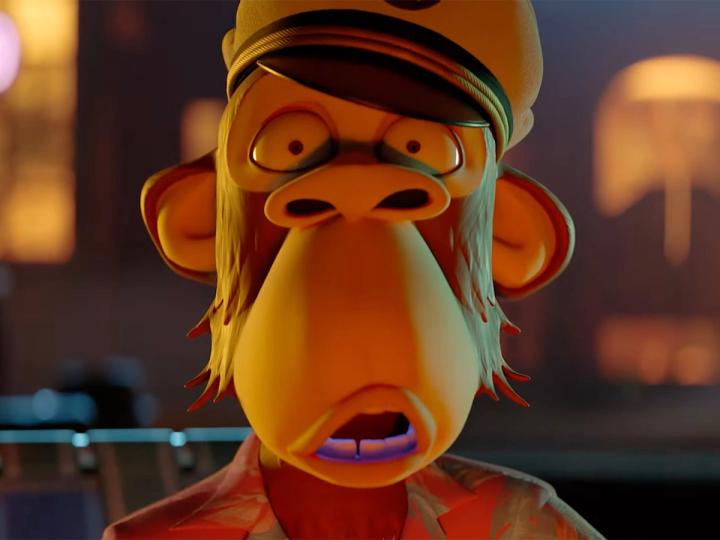
Bored Ape Yacht Club (BAYC) non-fungible tokens are rising again, fueling hopes of a broader revival in the battered NFT market as speculative appetite for cryptocurrencies returns.
Price floors, or the lowest value of Yuga Labs’ flagship collection, have risen from around 5 ETH to 10 ETH over the past month, while apecoin (APE), the ecosystem’s governance token, has also risen from below $0.10 to around $0.16 with a sharp increase in trading volumes.
The rally comes as memecoins and other high-risk crypto assets are outperforming more defensive sectors like decentralized finance (DeFi), suggesting that retail traders may be returning to the market after months of subdued activity.
For newly appointed Yuga Labs CEO Michael Figge, the rally reflects more than short-term hype.
“It’s clear from the numbers that for some time, as far as top-line digital collectibles are concerned, they were oversold,” Figge told CoinDesk in an interview. “There was a huge compression in price, but if you actually look at an overlay chart, unique holders were actually going up.”
Figge, who has held various executive positions at Yuga Labs since 2022, before taking over as CEO last month, argued that NFT prices had become disconnected from user engagement during the prolonged recession.

“A cynic will say that prices doubled and the number of unique holders didn’t double,” he said. “But really that’s just a recovery from a period when things fell disproportionately.”
Survival beyond expectations
The rally is also accompanied by a broader reassessment of digital art and on-chain ownership beyond short-term price speculation. In an essay last week, pseudonymous NFT collector and market analyst “Van” argued that while the speculative mania surrounding NFTs largely collapsed after 2021, institutional adoption of blockchain-based art has continued quietly in the background. “Speculation died, but the medium survived,” the essay said, noting acquisitions and exhibitions by institutions such as MoMA, the Pompidou Center and LACMA over the past four years.
The bullish move has coincided with renewed momentum in the speculative corners of the crypto market. CoinDesk’s MemeCoin Select Index was among the best-performing digital asset sectors last week, outperforming DeFi tokens as traders returned to placing higher beta bets.
Some market participants also point to the growing tension in DeFi as another possible driver of renewed demand for NFTs. A series of recent exploits and diminishing returns across lending protocols have dented confidence in the sector.
“With a well-planned stunt, you can lose everything,” Figge said. “That has to be solved in DeFi, but it has definitely made people reconsider the idea that it is the only use case. NFTs offer something different: they are linked to communities that persist beyond simple price action.”
Signs of renewed activity in NFT financial markets are also emerging. Early last week, a $2.8 million NFT-backed loan linked to a CryptoPunk was widely circulated on social media, and the lender would earn approximately $138,000 in interest over 90 days in what traders described as one of the largest NFT-backed loans to date.
The broader NFT bounce has spread beyond BAYC. Pudgy Penguins, another major collection, has also rallied strongly in recent weeks, while traders speculate that OpenSea, the marketplace synonymous with the NFT boom of 2021, could reignite activity by launching a long-rumored token.
‘Back to basics’
Still, Figge acknowledged that speculation remains fundamental to the market.
“It would be naïve to say that financial speculation is not a big driver,” he said. “Whatever happens in this cycle will rhyme with the previous one, but it will never be exactly the same.”
Meanwhile, Yuga Labs has refocused on community-building efforts, including more than 30 in-person meetups around the world over the past month.
“A lot of what made Bored Ape work in the first place (the social layer) hasn’t really been addressed in recent years,” Figge said. “We’re back to basics.”


