
ISLAMABAD:
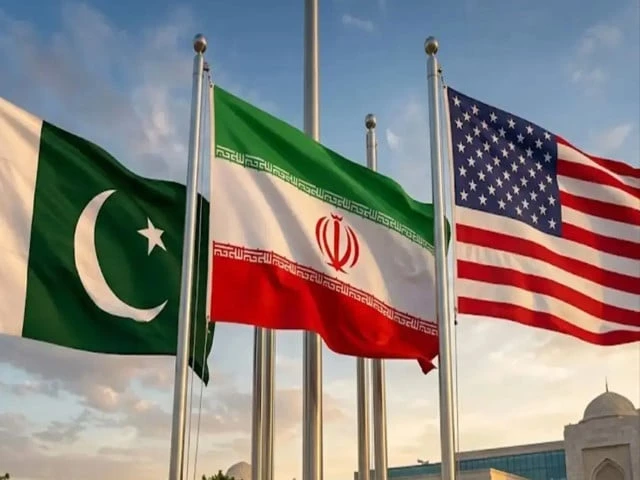
Pakistan’s quiet but intense diplomatic efforts played a pivotal role in preventing a potentially devastating regional conflict between Muslim countries, security sources revealed on Tuesday, as preparations enter the final phase for the signing of a historic peace deal between Iran and the United States in Switzerland later this week.
In a briefing with journalists, senior security officials offered rare insights into Islamabad’s role in facilitating diplomacy between the two old adversaries, while maintaining strict confidentiality about the content of the deal and future negotiations.
The briefing came days before a formal signing ceremony scheduled for June 19 in Switzerland, where representatives from Iran and the United States are expected to formally endorse “a historic understanding” aimed at ending months of escalating tensions and reducing the risk of broader conflict in the Middle East.
Security sources said Pakistan’s participation was not driven by narrow geopolitical interests but by a broader objective of ensuring regional stability and preserving unity within the Muslim world.
According to officials, Pakistan’s civilian and military leaders remained engaged with all relevant stakeholders throughout the crisis and worked quietly behind the scenes to avoid a conflict that could have engulfed the entire region.
“Through consultations and cooperation with all key stakeholders, Pakistan helped save the region from a major war that was planned to be imposed and which would have led to serious consequences,” a senior security source told reporters.
The officials particularly highlighted the role played by Field Marshal Asim Munir, describing the diplomatic effort as an example of strategic success achieved without military confrontation. “This was a war won through sincerity, competence, brilliance and the blessings of Allah for the good of humanity without actually being fought. That is the pinnacle of the strategy,” said a security source.
While emphasizing Pakistan’s contribution, officials repeatedly warned against speculation about the substance of the ongoing negotiations, saying the diplomatic process remained delicate and required discretion. “As a responsible mediator, Pakistan cannot afford to speculate. We will not discuss the content of the talks or what comes next,” the source said.
Officials acknowledged that attempts to derail the peace process could continue even after the agreement is signed. “Spoilers and detractors will continue to try to subvert peace efforts, but Pakistan will continue to work with its partners with utmost sincerity to achieve peace,” a source said.
The report also credited several Muslim countries, particularly Saudi Arabia, for helping create conditions conducive to dialogue. The officials praised Riyadh’s leadership, restraint and strategic patience during a period of intense regional tensions.
“A great credit goes to Muslim countries, especially Saudi Arabia, which demonstrated leadership, restraint and strategic patience to help avoid a war that could have engulfed the region and pitted Muslims against Muslims,” the source said.
Security officials also defended Pakistan’s growing military diplomacy and its engagement with friendly countries, arguing that such relations should not be viewed in a narrow perspective. “Military diplomacy and relations with friendly countries are part of broader statecraft and national interests. They cannot be seen in isolation,” the source added, responding to a question about the recent visit by the head of the Lebanese army.
During the briefing, security sources said terrorism and Afghanistan have become “inseparable realities” in the current regional environment. According to them, security forces and law enforcement agencies carried out 32,092 counter-terrorism and intelligence-based operations across the country this year as part of an intensified campaign against militant groups.
Sources claimed that 2,170 terrorist incidents had occurred with the backing and support of the Afghan Taliban regime. As a result of the operations, 1,861 terrorists were killed, while 640 Pakistani security personnel lost their lives in the line of duty.
“The statistics clearly demonstrate how Fitna al-Khawarij and Fitna al-Hindustan, operating under the patronage of the Afghan Taliban regime, have emerged as major threats to Pakistan’s national security,” the source said.
Defending Pakistan’s engagement with Kabul, the official maintained that Islamabad’s diplomatic contacts with Afghanistan had remained transparent and structured, focused on a single central demand: an immediate end to the support, facilitation and shelter provided to terrorist groups.
The official said Pakistan had maintained dialogue with the current Afghan administration from 2021 to 2025 through multiple channels in an effort to resolve disputes peacefully. However, those efforts failed to produce significant results due to what Islamabad viewed as the Taliban regime’s persistent unwillingness to act against terrorist organizations operating from Afghan soil.
“The Afghan Taliban repeatedly demonstrated a lack of seriousness in preventing the use of Afghan territory for terrorism and ending support for militant groups,” the official said. As a result, Pakistan finally decided to attack terrorist hideouts across the border, the official revealed, insisting that all cross-border military and air operations were carried out with “extreme precision” and were based on credible intelligence.
The official also launched a scathing criticism of the Taliban administration, accusing it of showing little respect for human rights, particularly the rights of women and children.
After decades of collaboration with the Taliban movement, Pakistan had concluded that the current regime was committed to imposing what the official described as a distorted interpretation of Islam.
“The regime’s irresponsible and violent behavior leaves little room for meaningful diplomatic engagement,” the official commented, adding that Pakistan’s only demand remains the dismantling of terrorist infrastructure and an end to all forms of support, shelter and facilitation for militants operating against Pakistan.
Kashmir remains a central issue
During the briefing, the officials also addressed developments in Kashmir and reiterated Pakistan’s long-standing position on the disputed territory. Security sources described Kashmir as the “unfinished agenda of Partition” and stressed that the dispute remained critical to regional peace and stability.
Officials recalled that the 1948 conflict was fought jointly by Pakistani forces, Kashmiri fighters and tribal volunteers, although they noted that multiple wars and military clashes had occurred in the territory since then.
According to security sources, India’s efforts to promote development projects and economic incentives in Indian Illegally Occupied Jammu and Kashmir (IIOJK) would not alter the aspirations of the Kashmiri people. “Development packages and subsidies cannot buy the sentiments of Kashmiri people,” a source said.
The officials further argued that demographic changes and legal measures introduced by India could not extinguish Kashmiris’ right to self-determination. Security sources described the occupied territory as one of the most militarized regions in the world and emphasized that public frustration remained widespread in IIOJK despite Delhi’s claims of normalcy.
Concern over unrest in AJK
Officials also accused India of trying to create instability in Azad Jammu and Kashmir (AJK) to divert attention from challenges in the occupied territory. Addressing the recent unrest in AJK, security officials defended the government’s handling of the protests and accused certain groups of pursuing agendas beyond legitimate public grievances.
According to the report, authorities initially engaged in dialogue with protest groups and attempted to address concerns through democratic means. Officials said elements within the movement had since revealed objectives that went beyond public welfare issues.
“The government adopted a democratic and conciliatory approach at all times. However, some elements preferred violence, arson and confrontation,” said a security source. Officials emphasized that no group would be allowed to challenge the state’s court order through force and warned that any attempt to exploit public issues for outside agendas would be dealt with under the law.
Security sources also defended the constitutional framework governing refugee representation and other political arrangements linked to the Kashmir dispute, saying such matters cannot be altered through coercion.
Treaty on the safety of water and the Indus
Security sources recalled the National Security Committee (NSC) statement issued on April 24, 2025, which described water as a vital national interest and pledged to protect it across the entire spectrum of national power.
Officials argued that Pakistan’s economy, agriculture and food security were deeply dependent on water resources, making the issue a matter of national survival. “Pakistan’s economic and social fabric is closely linked to water, agriculture and food security. Whatever is necessary will be done to protect these interests,” a security source said.
While underscoring Pakistan’s military preparedness, officials maintained that Islamabad had simultaneously launched a robust diplomatic and legal campaign against Indian violations of the treaty. At the same time, security sources recognized the need for better domestic water management.
“Regardless of its military capabilities, Pakistan must invest in water conservation, storage facilities, canals and better regulatory structures,” the official said, adding that Indian rhetoric around water was largely driven by domestic political considerations and efforts to sustain anti-Pakistan narratives.
In a sharp assessment of bilateral relations, sources said India had failed to achieve both its military and diplomatic objectives after ‘Marka-e-Haq’, and was now increasingly dependent on water-related rhetoric for its political messages.


