
ISLAMABAD:
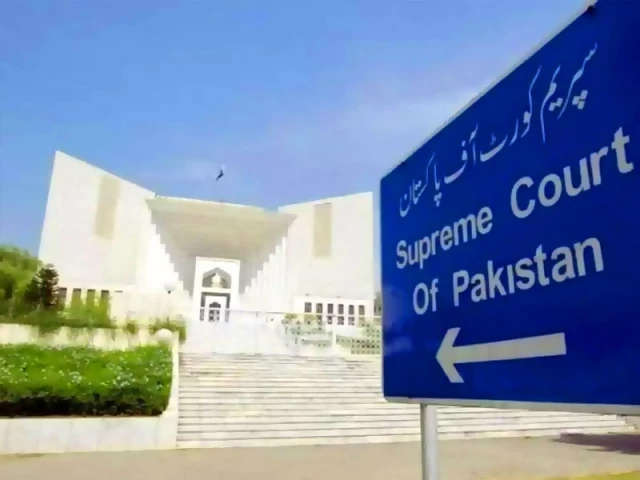
The Supreme Court (SC) ruled on Friday that it no longer has jurisdiction to hear cases under the National Accountability Bureau (NAB) law, holding that the Federal Constitutional Court (FCC) must hear all pending criminal appeals and petitions under amendments introduced earlier this year.
The ruling is expected to affect pending proceedings involving Pakistan Tehreek-e-Insaf founder Imran Khan and his wife Bushra Bibi in the £190 million NAB case. They had challenged the rejection of their bail applications before the SC, but the registrar returned their petition after raising objections, stating that the appropriate forum was the FCC. Friday’s ruling confirms that such matters fall within the jurisdiction of the Constitutional Court.
The ruling, delivered by a three-member bench headed by Justice Muhammad Ali Mazhar, resolved a jurisdictional issue that arose following amendments to the NAB law on March 5 this year. The court held that Sections 32 and 32A of the amended law, read together with Articles 175A and 175F of the Constitution, confer appellate jurisdiction in NAB matters exclusively on the FCC.
In a detailed 30-page judgment issued today, the SC ordered that all appeals and criminal petitions pending in NAB cases be transferred to the Constitutional Court. The three-member bench, comprising Justice Muhammad Ali Mazhar, Justice Musarrat Hilali and Justice Shahid Bilal Hassan, reserved its verdict on July 16 before issuing its brief order and later publishing detailed reasons.
Read: FCC Settles Imran ‘Force Release’ Case
The court rejected arguments that it could continue hearing bail applications while the Constitutional Court dealt with the main appeals, saying such an arrangement would be contrary to the law.
“It is not possible” for bail petitions to remain before the TS while substantive appeals are heard by the Constitutional Court, the ruling said, warning that dividing jurisdiction between two forums would create an illegal inconsistency.
The court also emphasized that jurisdiction is determined by law and not by the conduct of litigants or courts.
Addressing an argument based on an earlier bail order of the SC issued after the NAB amendments came into force, the court observed that the question of jurisdiction had not arisen in that case. He said the absence of an objection could not confer jurisdiction where the law did not.
“Even if no objection is raised, jurisdiction is determined by law,” the ruling says.
The court further observed that the reasons behind the earlier bail order could only be explained by the court hearing the matter as the question of jurisdiction had not been argued before it.
Read more: SC examines FCC competition
The judgment distinguished NAB matters from appeals against the Federal Shariat Court, noting that while the Constitution expressly empowered the SC to hear appeals against decisions of the Federal Shariat Court, there was no such jurisdiction for NAB appeals after the March amendments.
The court also rejected the principle that litigants choose the forum in which they wish to pursue the process.
“A legal forum cannot be created based on the preference or consent of a litigant,” the court said, adding that parties cannot “forum shop” by selecting the court they consider most favorable.
The jurisdictional dispute arose during the proceedings in a pending NAB case in which the petitioner’s lawyer Abad ur Rehman Lodhi argued that the SC should continue hearing the bail application. He relied on an SC bail order dated March 18, issued after the amended NAB law came into force.
Attorney General Mansoor Usman Awan opposed the statement, arguing that both appeals and bail petitions in NAB cases now fall exclusively within the FCC’s jurisdiction. He argued that a single case cannot be divided, one aspect being known by the TS and another by the Constitutional Court. The lawyer representing NAB supported the federal government’s position.


