NEWNow you can listen to Pak Gazette articles!
Mark Twain once said that the two most important days of your life are the day you are born and the day you find out why.
But I would add a third: the day I met Lionel Messi.
(Photo by Koji Watanabe/Getty Images)
It was a sticky, humid, storm-ridden day in Fort Lauderdale back in the summer of 2023, when Messi arrived at Inter Miami. The night before the Leagues Cup final, which would end up becoming Leo’s first trophy with the club, and the 44th title of his career, which would become a record.
But I was inside one of the suites at Inter Miami’s old stadium, waiting for an exclusive interview with a player I had covered (and like every other mortal) I had marveled at throughout my life and career.
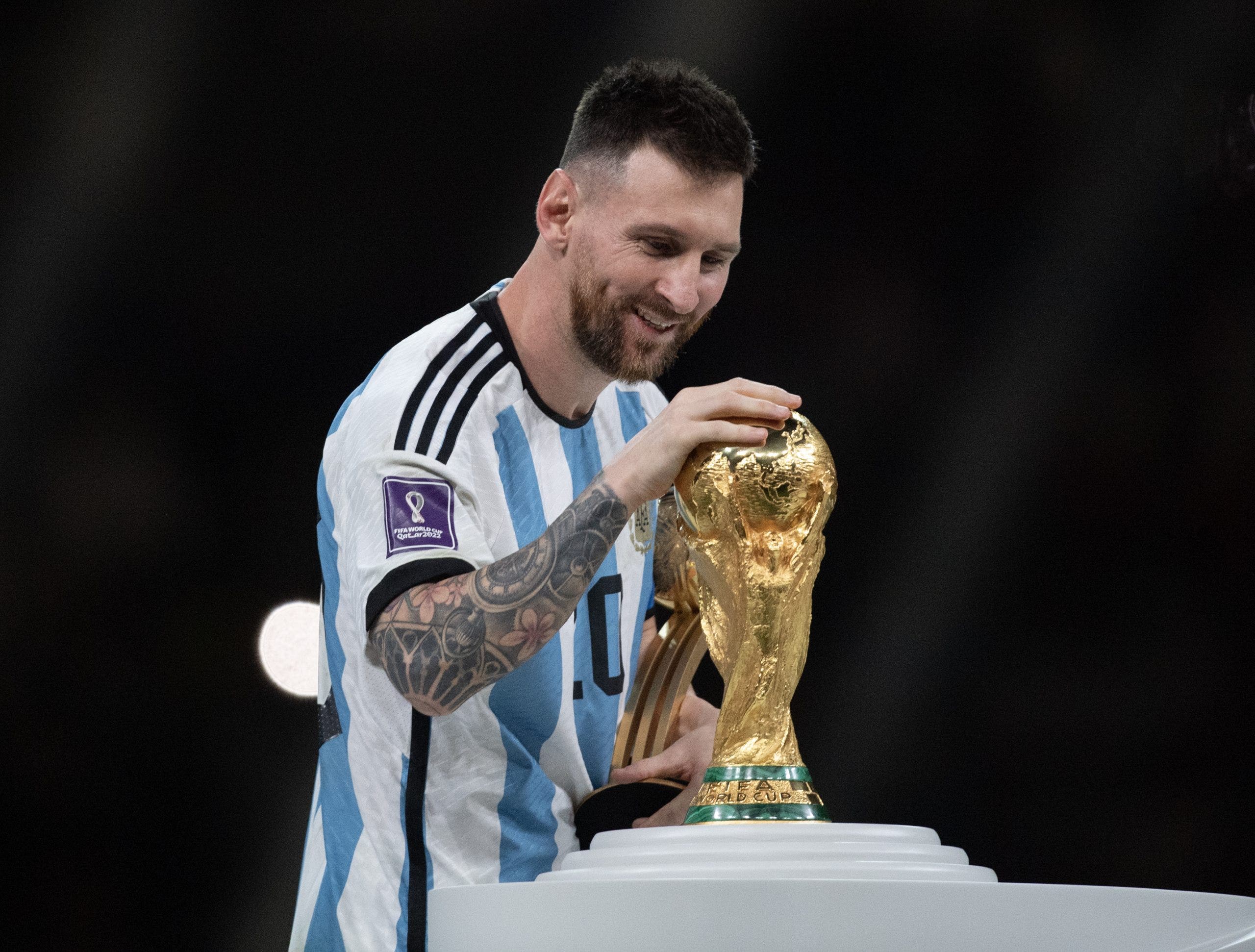
(Photo by Visionhaus/Getty Images)
As a football journalist, the values of objectivity are imperative bases of our work, and it is important to never get carried away when you meet someone you greatly admire. It also goes back to the well-known saying that “you should never meet your heroes,” wise words spoken from one legendary icon (John Lennon) to another (Mick Jagger). But I actually attribute this advice more to lines from Gustave Flaubert’s 1856 novel. Mrs. Bovary, which said: “Do not touch your idols: a little gold always sticks.”
But with Messi gold never does.
And for me, to be a true sports soldier as a journalist, you can’t just report on this beautiful game, you have to feel it. You have to live within the skin of what it means to be a fan, because they are the heart, the flesh and the bones of a club or a team. So, to know Messi is to represent what it would mean to any Argentine who would give his right arm to do the same. You owe it to them.
THE CONVERSATION BETWEEN Messi and I talked about the happiness of him and his family, now finally in Miami after leaving PSG, about his new life in the United States and the expectations of the coming years. And this was in the summer of 2023, shortly after winning the World Cup in Qatar and months before receiving his record eighth Ballon d’Or.
Messi, always an introvert, was extremely attentive, calm and thoughtful in his responses. This is a trait that everyone should know. He is not shy but rather an internal thinker. But when I was a child I was much worse at school. When he wanted to ask a teacher a question, he needed his best friend to do it for him. During his trial in Barcelona when he was 13, established stars such as Gerard Piqué and Cesc Fàbregas (of the famous generation of ’87) would remember that Messi did not speak or ask questions.
But it wasn’t necessary because they knew that everything he had to say would be on the field.
Going back to my meeting with Messi: I remember a moment when I asked him how successful the United States and MLS can be when it comes to competing with teams like Europe. Your answer? “Their success depends on them.”
And the reason I mention that is because it is that type of mentality that completely sums up Messi, as he has always been a person who truly believes that the rewards of triumph and prosperity are only dictated by one motivating factor: himself.

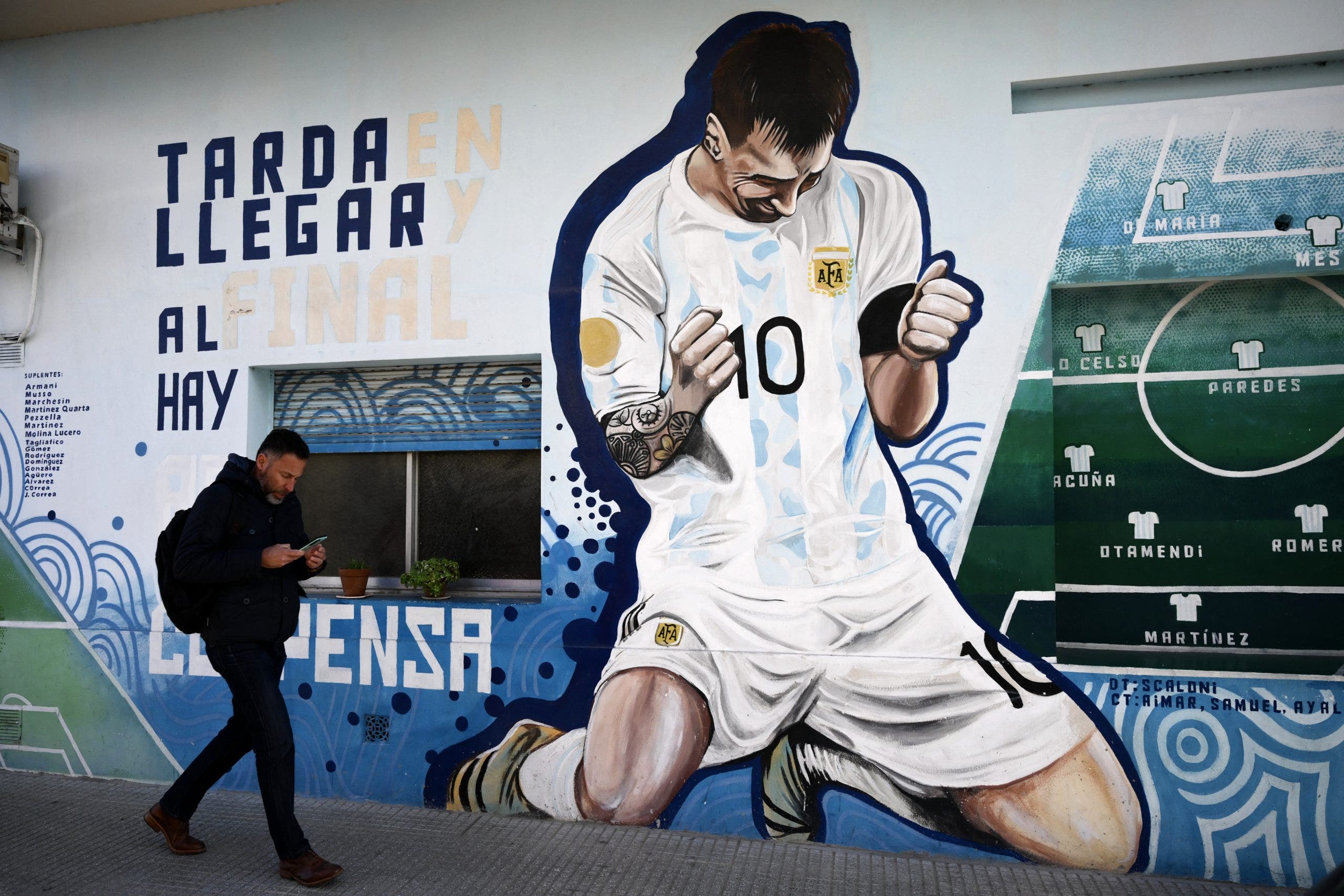
The mural from Messi’s childhood home. (Photo by MARCELO MANERA/AFP via Getty Images)
Messi grew up in Rosario, about 170 miles northwest of Buenos Aires. It is the city where the Argentine flag was raised for the first time during the War of Independence in 1812.
Messi lived in a humble neighborhood called The Descentin a house built by his father and grandfather. He played in the street until dusk and continually kicked the ball in the same spot on the neighbors’ wall to get the perfect angle. When he played for Newell’s Old Boys, his first trip outside of Argentina was to Peru and the night before the big tournament he ate chicken that didn’t agree with him. The next morning, the coach was worried and wanted to take him to the hospital. Messi argued and said all he needed was Gatorade. He drank it, played in the tournament, and single-handedly led the team to win the entire tournament.
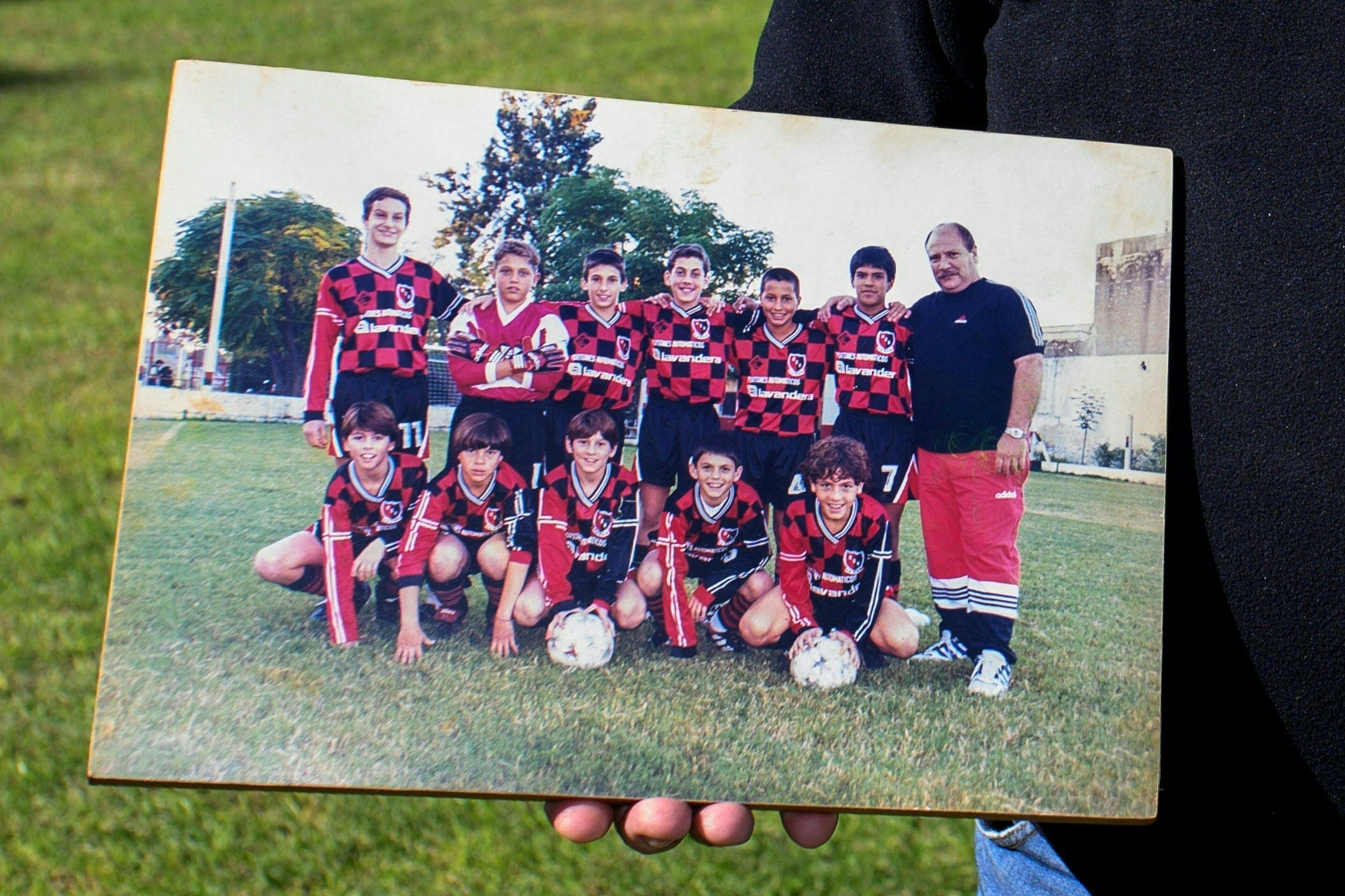
Messi, center, with his childhood club in Rosario. (Photo by Marcelo Manera/AFP via Getty Images)
IN SPITE OF ALL THE However, the admiration, the stardom and the attention, and the fact that he is a World Cup winner, a four-time Champions League champion and has won more individual trophies than anyone in the history of the sport, Messi is still that kid who needed growth hormones to keep up with his peers. Throughout his life, he was ignored again and again, but he never ran away from the eternal feeling that destiny is something you determine. And that’s why he’s the greatest of all time. His is a journey of determination and will, combined with the fact that what he does on the field is almost unbelievable.
From his solitary “Ankara Messi” goal for Barcelona against Getafe in 2007, which mirrors Diego Maradona’s own masterpiece in the 1986 World Cup against England, to my favorite (his 2018 World Cup goal against Nigeria), Messi has given us countless moments of magic.
But again, it all starts with iron determination.
The 2022 World Cup in Qatar, for example, began with a surprising defeat against Saudi Arabia. But Messi used this as a catapult to explode into greatness with Argentina and win every game from then on, including the electrifying final against France. In the midst of adversity, Messi, like his real-life character, is actually very calm. Sure, you will often see emotions and disputes on the field, but in terms of goals and knowing what you have to do to win, he is completely at peace.
“We couldn’t be upset because we knew he was calm,” said his former teammate Ángel Di María, talking about that opening defeat of the 2022 World Cup against Saudi Arabia. “Why should I feel bad when the eldest [player] “In history, our captain is completely calm and is sending a message to 45 million Argentines that this group will not let them down.”
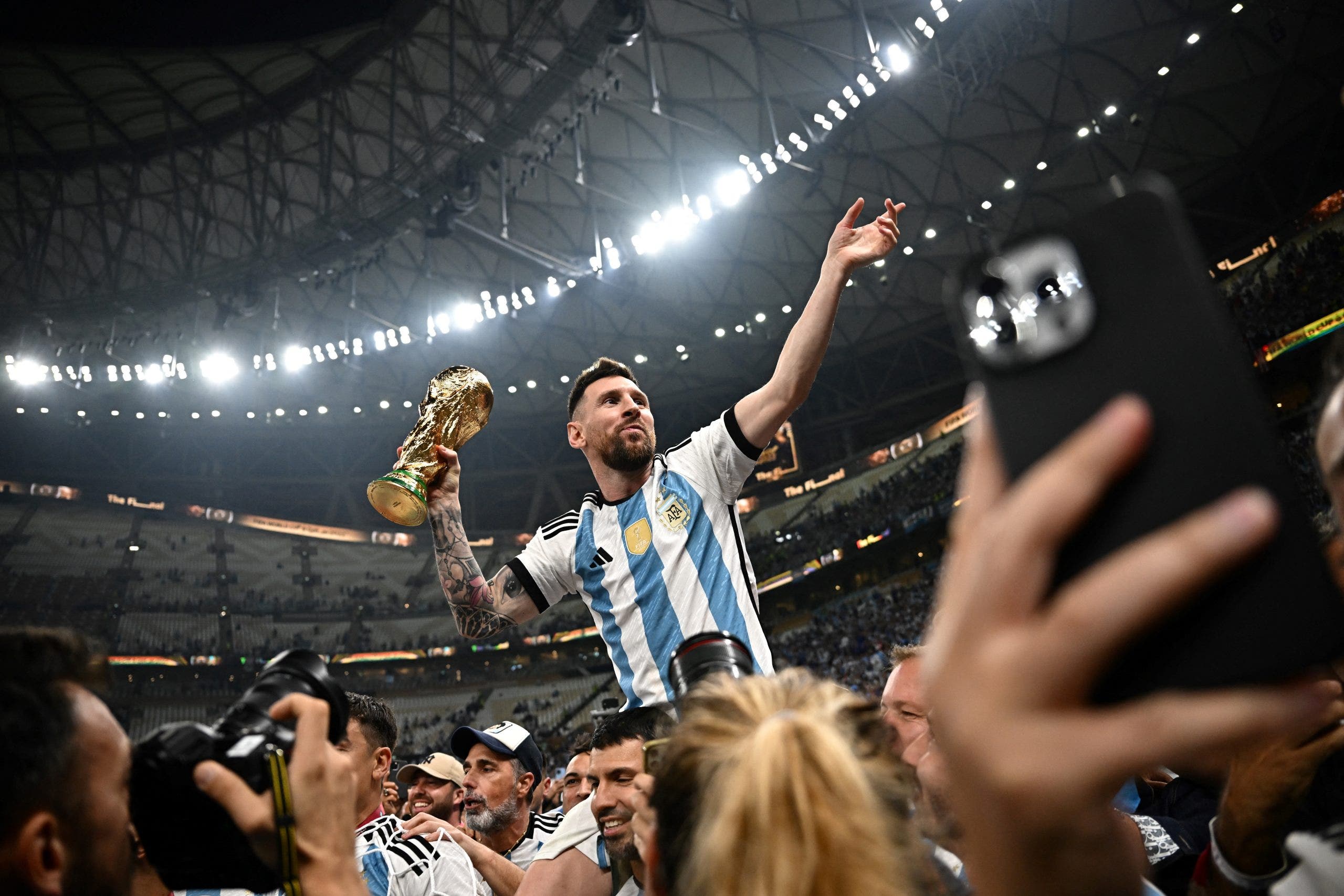
(Photo by Anne-Christine POUJOULAT / AFP via Getty Images)
And they didn’t.
And so, as we fast forward to the present and look ahead to Sunday’s World Cup final between Argentina and Spain at New York New Jersey Stadium, I can’t help but feel extremely excited about the fact that this is Leo’s World Cup curtain call. There is a sadness that inhabits me because I know that after tomorrow, regardless of the score, Lionel Messi will never again grace us on the grandest stage.
Of course, anything can happen, and Messi could turn 180 degrees and remain committed to the fact that, as a 43-year-old superstar, he will grace us by playing in 2030. Nothing is impossible and if anyone can do it, it’s him.
But this is more wishful thinking than anything else. The harsh reality is that Sunday’s final will be the last time Messi urges his team with a speech similar to the Shakespearean prose of Henry V: “Once more in the breach, dear friends, once more…”
Let me change that sentiment, as it’s probably not the best idea to give the greatest living Argentinian a quote from the most renowned English playwright. Let me focus on the eternal words of Jorge Luis Borges, born in Buenos Aires, one of the most influential writers and poets in Spanish literature.
“For me, beauty is a physical sensation, something we feel with our whole body. It is not the result of a judgment. We don’t arrive at it by rules. We either feel beauty or we don’t.”
That’s how I feel about Lionel Messi. Words are not enough. Neither does the narration. Or even a highlight.
(Photo by Luis ROBAYO/AFP via Getty Images)
Messi’s genius must feel, without restrictions or doubts. Because when he enters the field of play and dances with the ball, time stops. For everyone else he moves very fast, but for him it’s calm. Messi changes direction like lightning, resisting the air and constantly avoiding air pockets. Not only does it create moments of awe, it leaves dust on the field only for an opponent to chase a shadow they never knew existed.
Messi has always been about deceiving reality. He’s been doing this since he was five years old, when he first walked onto a field under the illusion of an older kid, since his beloved late grandmother lied to the coach and told him he was older than he looked.
After that, he never looked back and the world of football was never the same again.
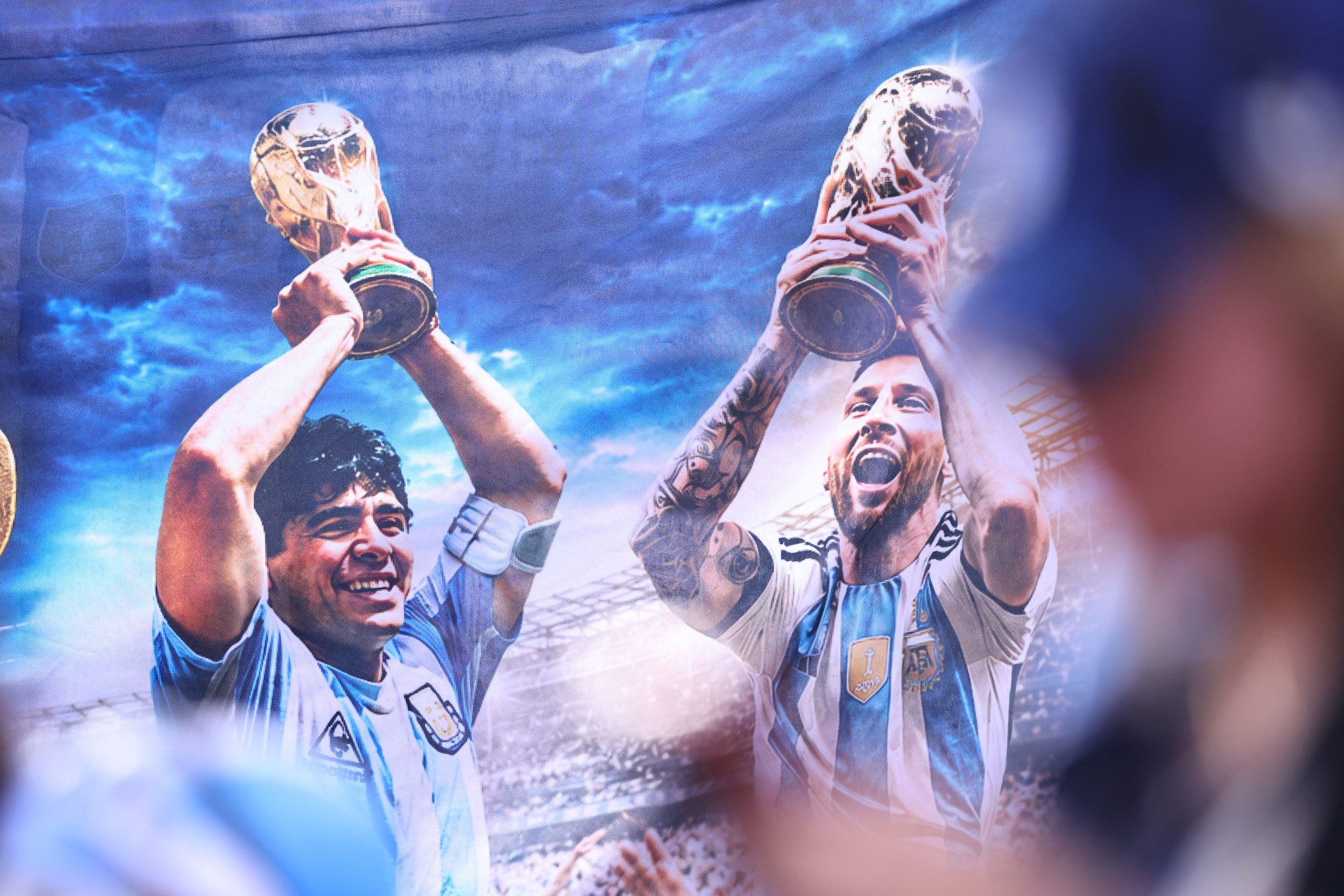
(Photo by Robbie Jay Barratt – AMA/Getty Images)
Sunday’s game is against a team that in a way he helped build, as the trajectory of Lamine Yamal and the numerous La Masia graduates are the result of the unwanted situation that occurred in 2021 when Messi had to leave his beloved Barcelona.
But that story has already been told. This Sunday game is about Argentina and Spain, two Spanish-speaking nations facing off in the land of immigrants. Right next to the stadium is the second largest shopping center in the United States, the american dream. This is the perfect way to draw a parallel with the final, as it is indeed a match that represents this spirit: the supreme pursuit of happiness through hard work and perseverance, regardless of your background.
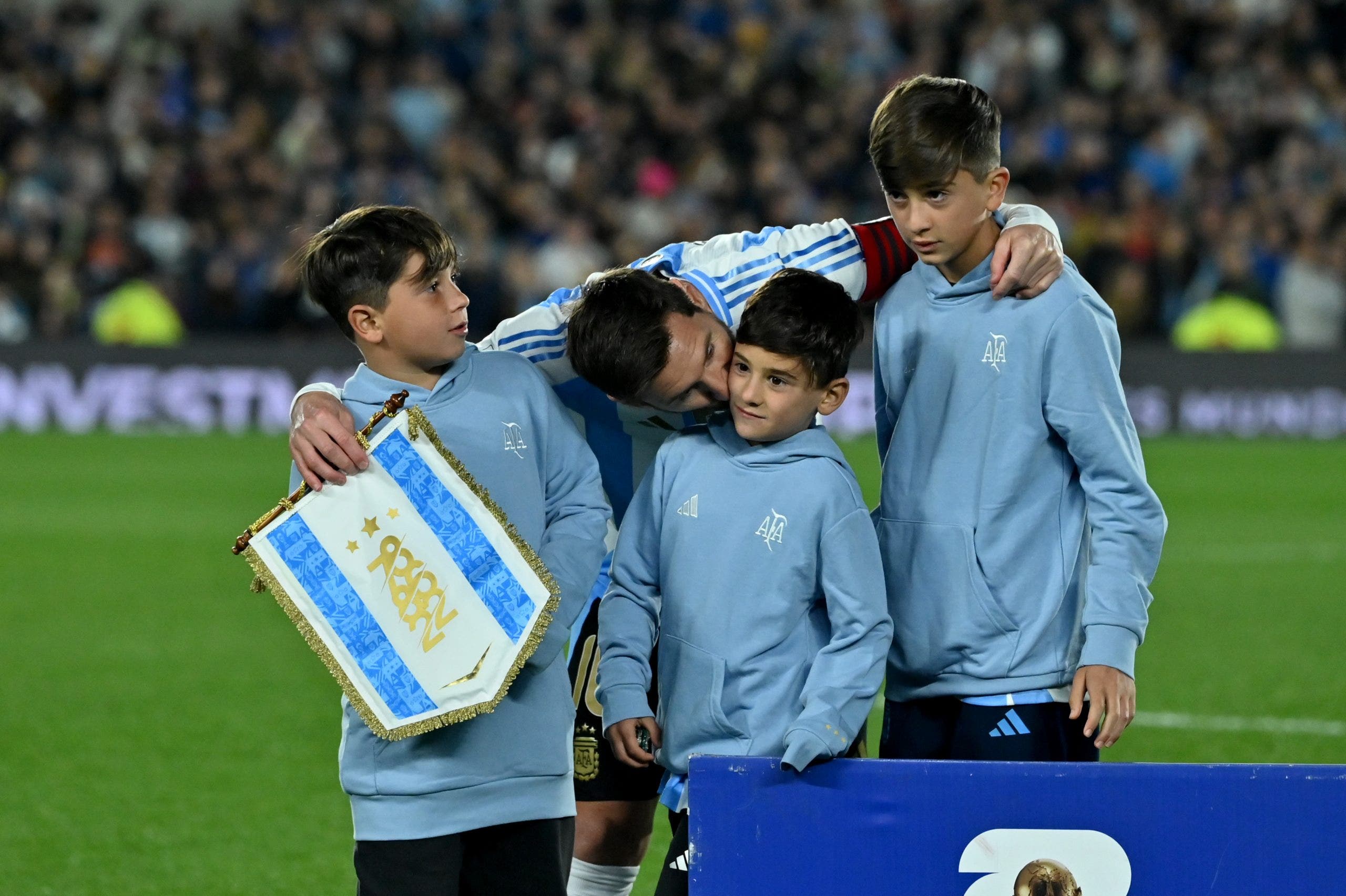
Messi with his three children. (Photo by German Adrasti/Getty Images)
Messi, like me, is a two-time immigrant. And like me, one who left South America for Europe and eventually the United States. So I empathize and strangely connect with his journey, one that could come with even more history as he seeks to win back-to-back World Cup titles for Argentina. Something that has only been done twice in the history of the tournament.
History awaits. And so does the sadness of a final battle, a last piece of poetry to write.
All of us will take it all in with the enduring, if failed, hope that time will remain frozen.
But we know that this will not happen. The only thing we can do is get up at the end of the match and, regardless of the result, applaud the genius, shed a tear and thank the football gods who, throughout their efforts, gave us the miracle of Lionel Messi.