
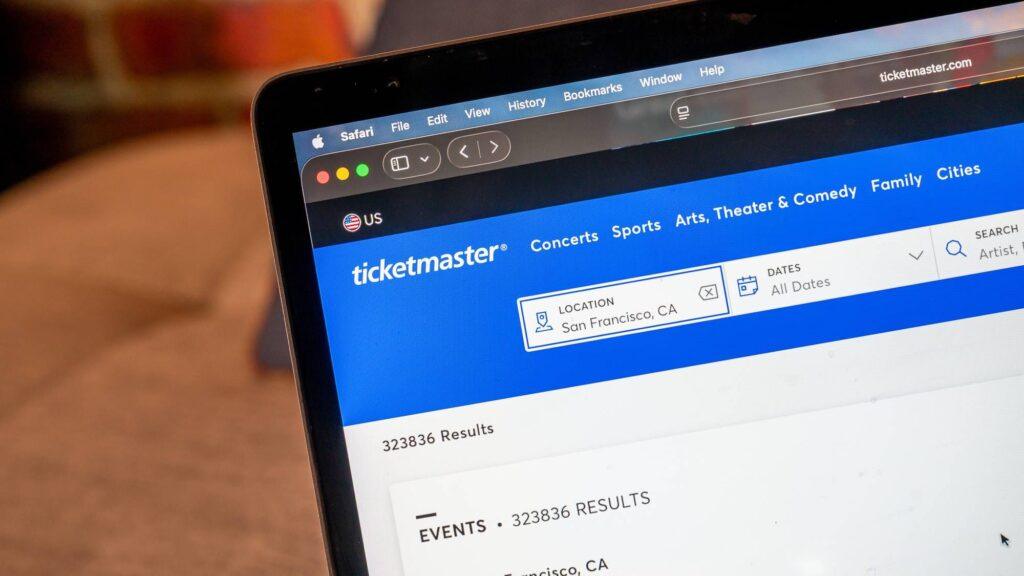
- The president of Ticketmaster has revealed that waiting line positions are not random, contradicting a 2018 company post.
- It has led music fans to believe that the company determines queue location based on account activity.
- It adds to the theory that Ticketmaster prioritizes scalpers and resellers over genuine fans.
Ticketmaster has found itself in another catastrophic sinkhole thanks to its president, who just dropped a major bombshell on queue positions.
For years, music fans have been told that the location of queues at Ticketmaster is randomized so that everyone has a chance to get tickets to see their favorite artists. Turns out the live music giant has been lying to our faces.
A conversation on X between Ticketmaster president Saumil Mehta and the fan account @lexs_version sparked this, where Mehta responded to the latter’s question. complaints about queue positions, stating that he “doesn’t know where this notion that queue positions are random comes from.” You can read his full response below.

I appreciate these comments. I don’t know where this notion that queue positions are random came from. I’ve never said it, I’ve asked it internally and can’t find it written in the help content etc. That said, I understand where you’re coming from. Would it be possible…?May 13, 2026
According to Mehta, neither he nor anyone at Ticketmaster had made such a claim, but he quickly met his match when a number of accounts found a 2018 post shared by the official Ticketmaster account page that explicitly stated that queue locations are randomly assigned (see below). Mehta has kept radio silent since then, leaving us without explanation.
This has raised a new burning question: If Ticketmaster doesn’t randomize queue locations and it doesn’t matter what time you join the online waiting room, what criteria does Ticketmaster use to determine queue numbers?
We actually got this idea from your company! pic.twitter.com/TyejU3OauWMay 13, 2026
The hole only gets deeper
In the original post by When they tested this on a separate account, every lobby they joined put them around the 20,000 mark, resulting in a strangely consistent pattern of placements.
However, this is just one example and apparently these constant queue placements are common for many people. This has opened widespread investigation among music fans who now attribute it to one theory: account activity.
This has led users to believe that more active accounts tend to get lower numbered placements in Ticketmaster’s queue, giving them a better chance of purchasing tickets. For example, one user believes that the reason he managed to purchase multiple tickets for a single tour is because he uses his account to transfer each ticket he purchases to those attending the show with him.
Adding to this rant, the reason I saw Taylor and see Harry/Olivia multiple times is my husband’s Ticketmaster account. You always get queue numbers less than 2k, often hundreds. What is the most notable activity on your account? the fact that you transfer EVERY TICKET YOU BUY https://t.co/PfgSIAQjLUMay 13, 2026
Now, music fans are even more convinced that the company has been prioritizing resellers and resellers all along because, if we base this on account activity, accounts designed to scam others would need to spend a lot of time purchasing tickets and then go back through Ticketmaster to list them for resale, where they can get away with charging well above their face value.
As a result, it means that Ticketmaster can potentially make more money on resale fees, while true music fans have to pay exorbitant prices for resale tickets or spend money on VIP tickets and other exclusive packages, aka the types of tickets that are often the only ones left due to their low demand.
It remains just a theory, and Mehta has neither confirmed nor denied whether this is the case, but the longer Mehta remains silent, the more agitated and demanding customers become.
Ticketmaster has been under intense scrutiny since the Eras Tour fiasco, and it hasn’t been long since Ticketmaster’s parent company Live Nation was deemed an illegal monopoly, so Mehta’s apparent slip-up really is the icing on the cake.

Follow TechRadar on Google News and add us as a preferred source to receive news, reviews and opinions from our experts in your feeds.


