
He says the country faced serious economic challenges in recent years, but managed to avoid default through coordinated efforts.
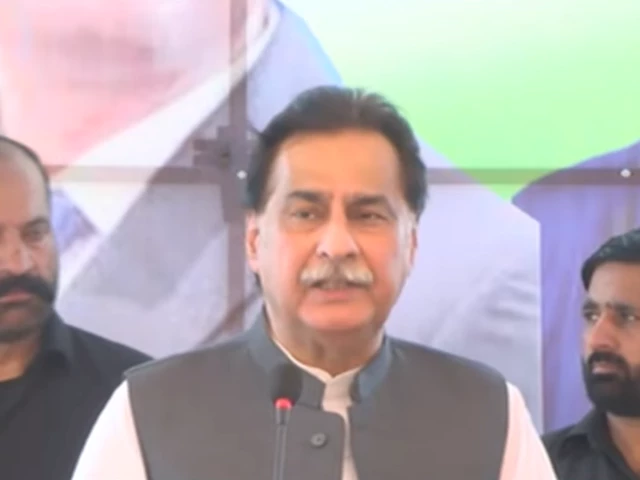
National Assembly Speaker Ayaz Sadiq speaking to the media in Lahore. PHOTO: SCREEN CAPTURE
LAHORE:
National Assembly Speaker Sardar Ayaz Sadiq on Sunday said Pakistan is being recognized globally for its role in regional diplomatic efforts, and credited the country’s leadership for actively promoting peace and stability.
Speaking to the media in Lahore, he said there were tense moments during the negotiations between the United States and Iran, but Pakistan’s leadership helped keep the process going.
“Today the world is talking about Pakistan,” he said, adding that the global perception of Pakistan has improved, noting: “Today, people proudly say they are from Pakistan.”
Referring to recent diplomatic engagements, Sadiq said that Pakistan’s leaders, including the prime minister, military leaders and the Ministry of External Affairs, worked in close coordination. “Prime Minister Shehbaz Sharif and Field Marshal played a key role and DG ISI also contributed significantly,” he said.
He also stated that Pakistan’s efforts were recognized internationally. “I met with leaders in Türkiye and they told me they were praying for Pakistan’s efforts,” he said.
On February 28, the United States and Israel launched a joint offensive against Iran, and Tehran retaliated with attacks against Israel and other countries in the region that host American assets.
The war has been on hold since April 8, when Pakistan brokered a two-week ceasefire. Islamabad, in its diplomatic efforts, organized direct talks between Iran and the United States on April 11, the highest-level engagement between the two sides since 1979.
While the talks ended without a deal, they did not fail and reports suggest a second round could take place in Islamabad next week.
He highlighted that Pakistan had taken an early stance in favor of de-escalation during regional tensions and had consistently supported diplomatic solutions.
He further noted that Pakistan had faced serious economic challenges in recent years but had managed to avoid default through coordinated national efforts. “There were attempts to push Pakistan into default, but our political and military leaders worked day and night to bring the country out of the crisis,” he said.
Read more: Twin cities beef up security, suspend transportation ahead of US-Iran talks
Last month, the government increased oil prices by Rs 55 per liter due to rising global tariffs amid the regional conflict, while the prime minister temporarily absorbed the impact through a subsidy of Rs 129 billion.
On April 2, fuel prices rose sharply again, with gasoline rising to Rs 458.4 per liter and high-speed diesel to Rs 520.35 per liter. Within 24 hours, the government reduced the tax on oil, lowering gasoline to Rs 378 per liter.
This followed another cut when diesel was reduced by Rs 135 per liter and petrol by Rs 12 per liter after earlier sharp increases linked to global price fluctuations during the US-Iran conflict.
Chief Minister Shehbaz on Friday approved a further reduction in the price of high-speed diesel from Rs 32.12 per liter to reduce the price to Rs 353.43 per litre.
Sadiq further said that Pakistan now maintains relations with multiple global powers. “We have friendships with Russia, China, the United States and Iran, but not with India,” he added.
Referring to recent regional developments, he said Pakistan’s military response had demonstrated its strength. “For the first time, the world has seen Pakistan from a different perspective: that it can solve problems,” he said. He praised the development initiatives in Punjab and thanked the leaders for funding development in his constituency.
Sadiq further said that the country had gone through multiple crises, including economic pressures, floods and regional tensions, but had continued to move forward.


