
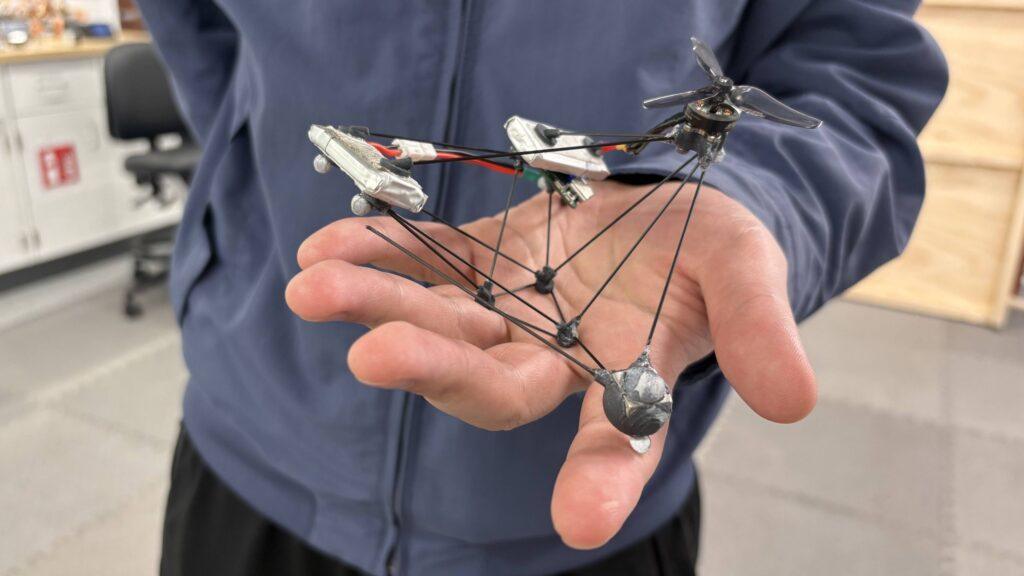
- The prototype drone rotates its entire body up to 25 times per second to become almost invisible.
- The Phantom Twist’s single engine spins the entire airframe in one direction and its propeller in the other.
- The AI design process tested 20,000 possible designs to find the optimal configuration
Drones have a visibility problem. Whether they’re filming guests at a wedding or looking for candid shots of nesting birds, the moment a drone is detected, it can change the behavior of whatever it’s observing: wildlife scatter, people act differently, and you end up with dubious results.
A team of engineers at Northwestern University in Illinois may have found a way to fix this problem, and it has nothing to do with camouflage. Their drone prototype, called “Phantom Twist,” doesn’t try to look like its surroundings. Instead, it blurs so quickly that the human eye simply can’t keep up.
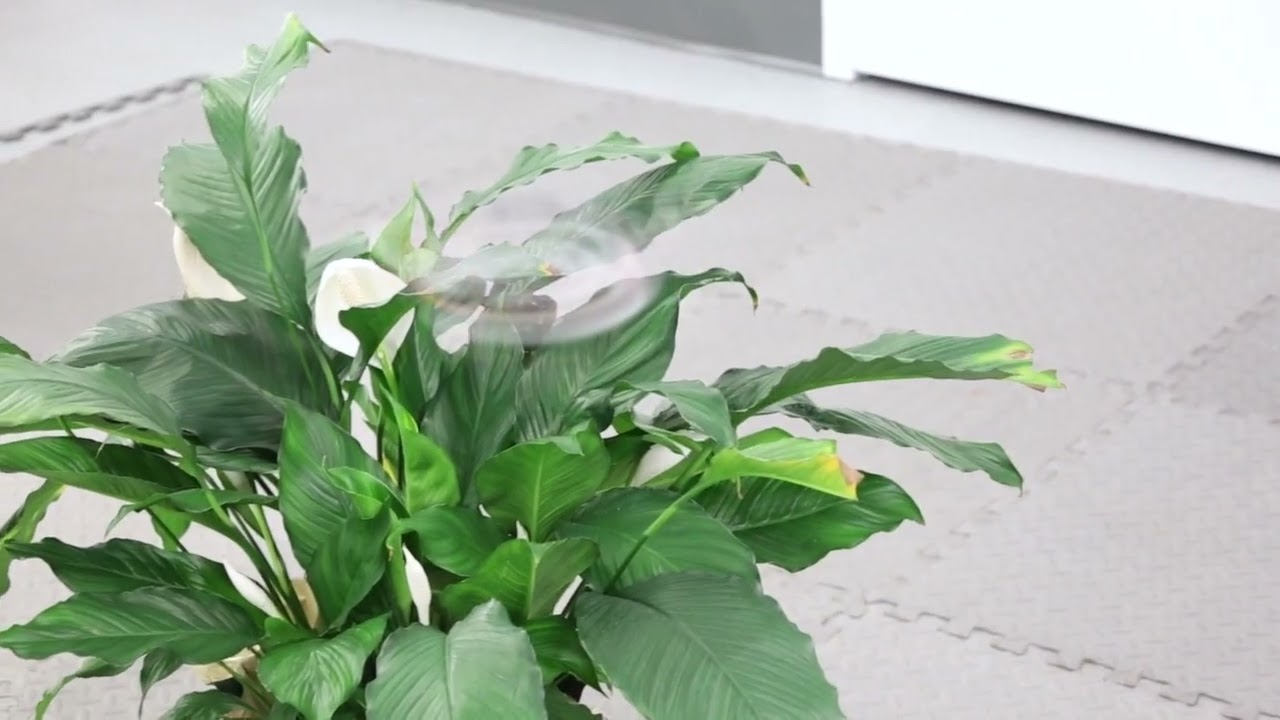
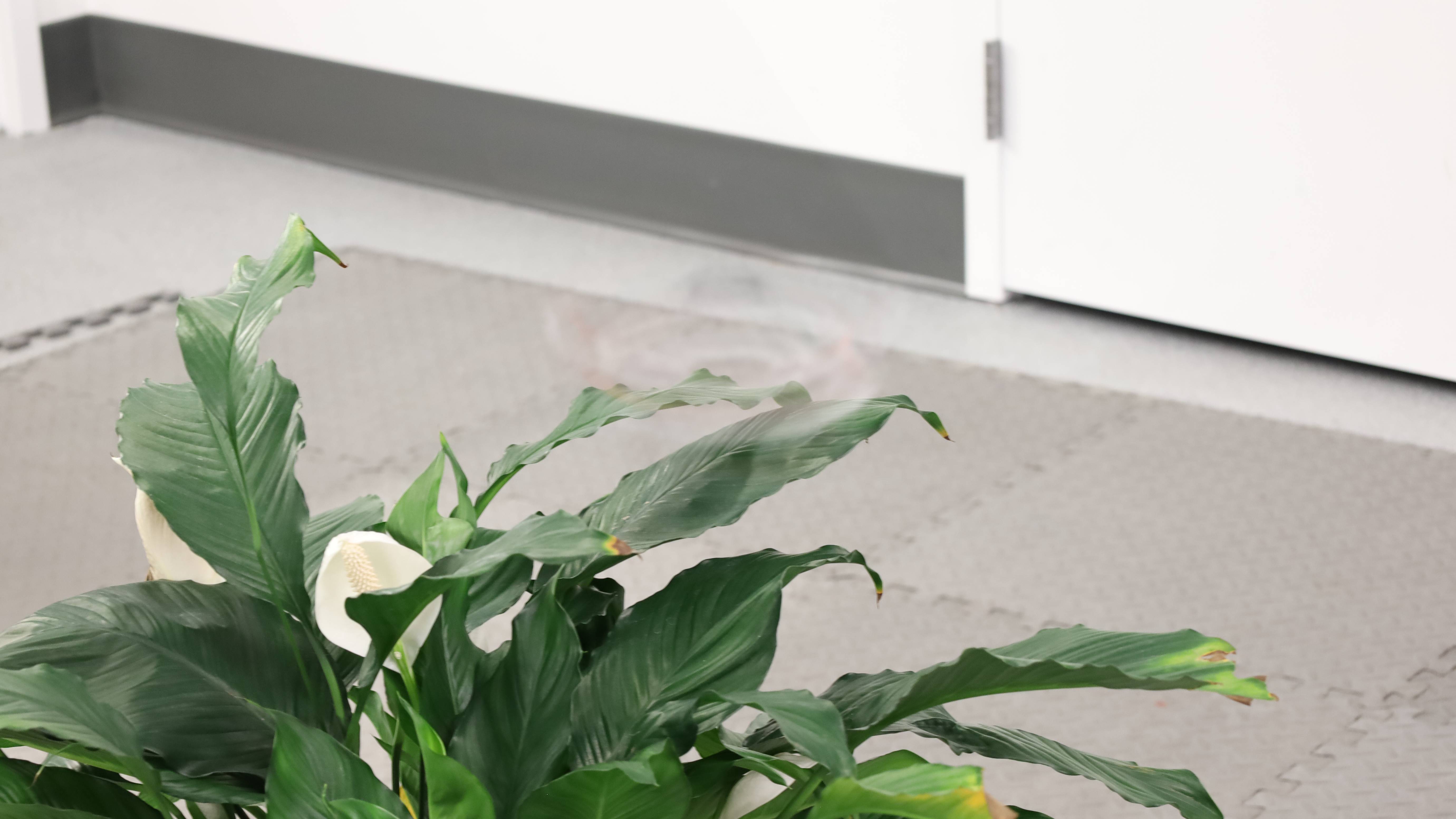
The drone rotates up to 25 times per second, much more than the eye can resolve in any other way. The drone does not disappear completely, but instead becomes what researchers describe as a faint, semi-transparent blob that blends into the sky or landscape behind it. It’s not invisibility in the science fiction sense, but according to the team it is ten times more difficult to detect than a conventional quadcopter.

Look
you make me spin
The trick is in the design itself. A typical quadcopter has four rotors spinning while its main body remains completely still, which is exactly why you can still make it out against the sky: the frame doesn’t move, so your eye stays on it. Phantom Twist ditches that setup entirely. It operates with a single motor and a single propeller, with the propeller rotating in one direction and the rest of the drone body rotating in the opposite direction. There is no fixed part left for the eye to grab onto.
However, building something that flies stably while spinning that fast is no simple engineering job, so the team leaned on AI to do the heavy lifting. The process began with around 20,000 computer-generated drone designs, each of which was checked to ensure stable flight. From there, optimization algorithms repeatedly repositioned the drone’s key components (motor, propeller, circuit board, battery, and counterweights) so that they never visually overlapped as everything rotated.
Each candidate design was then simulated by spinning over 100 real-world photographic backgrounds and scored using a model built to approximate human vision, with the 500 lowest-scoring designs going through additional rounds of optimization before the final version was built.
The result distributes its components at different heights and angles, so that when it is in motion, everything blurs into a soft haze. It’s clever stuff and a reminder of how much of what we “see” comes down to how our eyes process movement over time rather than taking a perfect still image.
However, it’s worth being clear about what Phantom Twist is and isn’t. This is a university research prototype, not a product with a release date or price, and is still far from ready for real-world deployment.
The propeller is audible although the body is not very visible. There is also no camera or imaging payload in the current build, raising an obvious question about its stated wildlife monitoring and infrastructure inspection ambitions. It feels like a drone that spins 25 times a second needs some serious image stabilization or derotation tricks before it can shoot anything usable. The team has not yet detailed how (or if) they plan to resolve this.
There’s an unavoidable privacy angle to any drone that’s also harder to see, and it’s not hard to imagine less charitable uses for the same principle in the future. For now, however, this remains a National Science Foundation-funded lab experiment, aimed squarely at reducing wildlife disturbance rather than surprising anyone, and there’s no indication that the rotating body’s focus will shift toward consumer hardware any time soon.

Follow TechRadar on Google News and add us as a preferred source to receive news, reviews and opinions from our experts in your feeds.


