
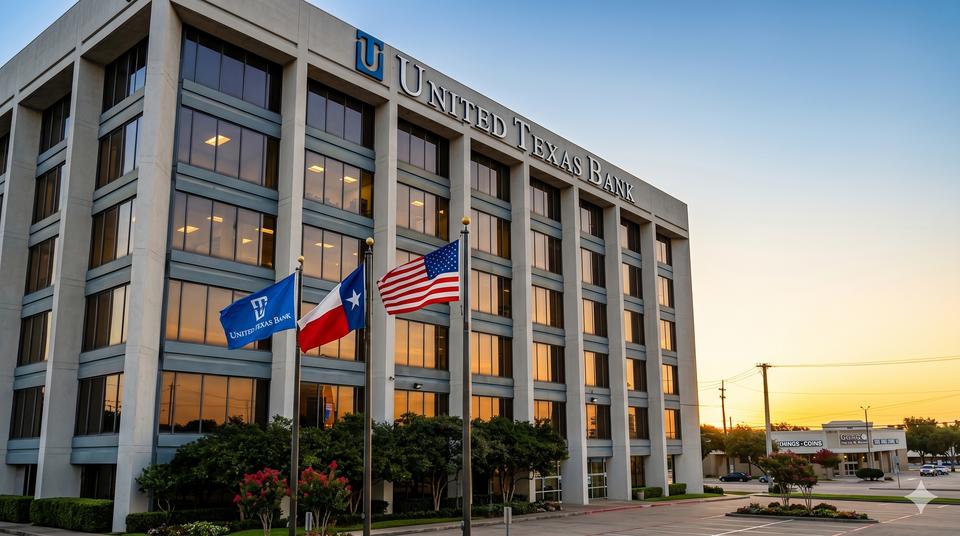
A forty-year-old Texas bank is taking the national stage to challenge Wall Street’s push to control the digital asset industry.
United Texas Bank (UTB) gained approval from the Office of the Comptroller of the Currency (OCC) to convert from a state-chartered financial institution to a nationally chartered bank on May 15, Scott Beck, the company’s president and CEO, told CoinDesk on Wednesday.
The conversion move, Beck added, aims to position his cryptocurrency-friendly bank as the main bridge between the cryptocurrency industry and traditional financial institutions and provide digital asset services. According to him, the UTB has been fully complying for years, while “Wall Street continues on tiptoe.”
The conversion granted by the OCC came with two conditions that Beck said have already been met. “Those conditions were met as of today, May 27,” he said. As of 2024, UTB operated under a Consent Order with the Federal Reserve, related to its Bank Secrecy Act and its compliance infrastructure.
“Rather than seeing it as a setback, we treated it as a mandate to build something exceptional, and we did. The result is UTB PRISM SENTINAL, our proprietary BSA/AML compliance platform,” he said.
This milestone makes UTB one of the first U.S. banks to successfully complete an OCC conversion since the passage of the Dodd-Frank Act 15 years ago, Beck added. He said the conversion also uniquely positions UTB as a bridge between crypto companies around the world and the US banking system, access that very few banks today are willing to provide.
“The concept of United Texas Bank is a centralized value center,” said the president of UTB, a bank that he says is unknown nationally but widely sought after by crypto companies.
“If you’re a digital asset player, you can’t get an account at a Bank of America or a Citibank. You can come to United Texas Bank and basically have full access to the US dollar,” he said, adding that his bank has been serving reputable crypto companies for about five years, handling more than $120 billion in transactions for them a year.
Standing with the giants
Beck explained that the OCC’s strategic conversion puts the Dallas-based institution on par with money center giants like Bank of America and JPMorgan Chase, granting it an identical federal license, full trust powers, and direct access to the Federal Reserve’s ACH and wire transfer systems, while maintaining the FDIC insurance it had.
However, unlike traditional Wall Street firms that are beginning to explore the crypto ecosystem, UTB already “supports a large portion of global crypto liquidity, releasing $10 billion a month in US dollar volume to foreign banks, over-the-counter (OTC) desks, and major exchanges.”
UTB is not alone in the race for a competitive place within the growing crypto sector in the United States. Last week, Minnesota enacted new rules allowing local banks to fight Wall Street for cryptocurrency profits. State banks and credit unions joined forces with lawmakers to push for legislation giving them authority to provide cryptocurrency custody services to their customers.
For UTB, the conversion marks an ambitious operational turnaround, Beck added. While cryptocurrency startups have spent years pursuing limited and trust statutes that exclude them from the Federal Reserve’s payment lanes, UTB’s national charter bypasses those restrictions entirely.
A US first
“We are the first to move to the national banking scene with full access to the Federal Reserve for wire transfers and ACH,” Beck added.
By moving away from the Texas Department of Banking and positioning itself directly under the OCC, UTB aligned its corporate structure with the executive branch of the federal government, protecting its customers from the fractured regulatory landscape that historically stifled crypto companies, Beck said.
To further capitalize on its federal upgrade, the bank is launching UTB Atomic, an AI-powered real-time payments network designed to recover the 24-hour liquidity infrastructure that collapsed when Silvergate and Signature Bank did.
In a 24/7 crypto market, traditional bank closures create huge settlement bottlenecks for institutional traders operating at 3:00 a.m. UTB Atomic solves this by enabling instant off-balance sheet clearing between institutional clients, while a parallel AI network, UTB Prism Sentinel, continuously performs real-time blockchain surveillance to neutralize compliance risks, Beck explained.
“The biggest issue facing larger financial institutions is the ability to actually track what happens as payments are made,” Beck said, adding that the system is designed specifically to navigate upcoming regulatory thresholds, such as the federal stablecoin frameworks under the GENIUS Act and the Clarity Act.
With a comprehensive, full-service trust and digital asset custody department scheduled to launch this summer, UTB aims to bridge traditional finance and cryptocurrency and position itself as the native financial system for the next era of global commerce, Beck said.


