
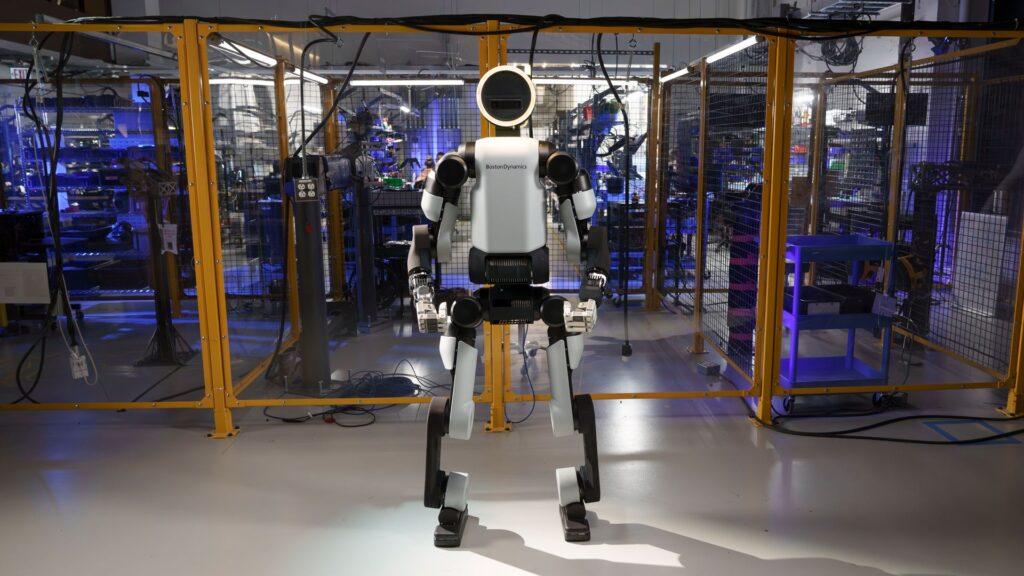
- Boston Dynamics Atlas can deliver a drink
- He also delivers the cooler because he can lift up to 110 pounds.
- We also get a glimpse of how Atlas Product’s humanoid robots are being trained.
Atlas delivers a drink the same way the Hulk would: forget the can, bring the cooler. In a new video demo, we finally get a good look at what the new Atlas Product humanoid robot can do, and it’s an eye-opener, to be sure.
The last time I saw the Atlas product at CES 2026, it was stiff as the all-electric Atlas prototype moved boxes and folded almost like an accordion. The upgraded Product, however, has even more impressive movements, especially since no part of its body seems limited by typical human-level flexibility.
Look
While you could rotate your torso at most 90 degrees, Atlas can rotate your upper body a full 360 degrees, an ability that comes in quite handy when pouring a cold, icy drink. The new robot, according to a Boston Dynamics statement delivered in January, has 56 degrees of freedom, can replace its own battery and lift up to 110 pounds.

Boston Dynamics actually delivered two videos on Monday (May 18), and while it’s fun to see the one of the Atlas Product robot lifting a refrigerator and handing it to a lab technician so he can retrieve a cold drink, it’s the second deep-dive video on how Boston Dynamics trains Atlas and why they chose to demonstrate its skills in this slightly comedic way, which is worth watching.
Atlas practices…a lot
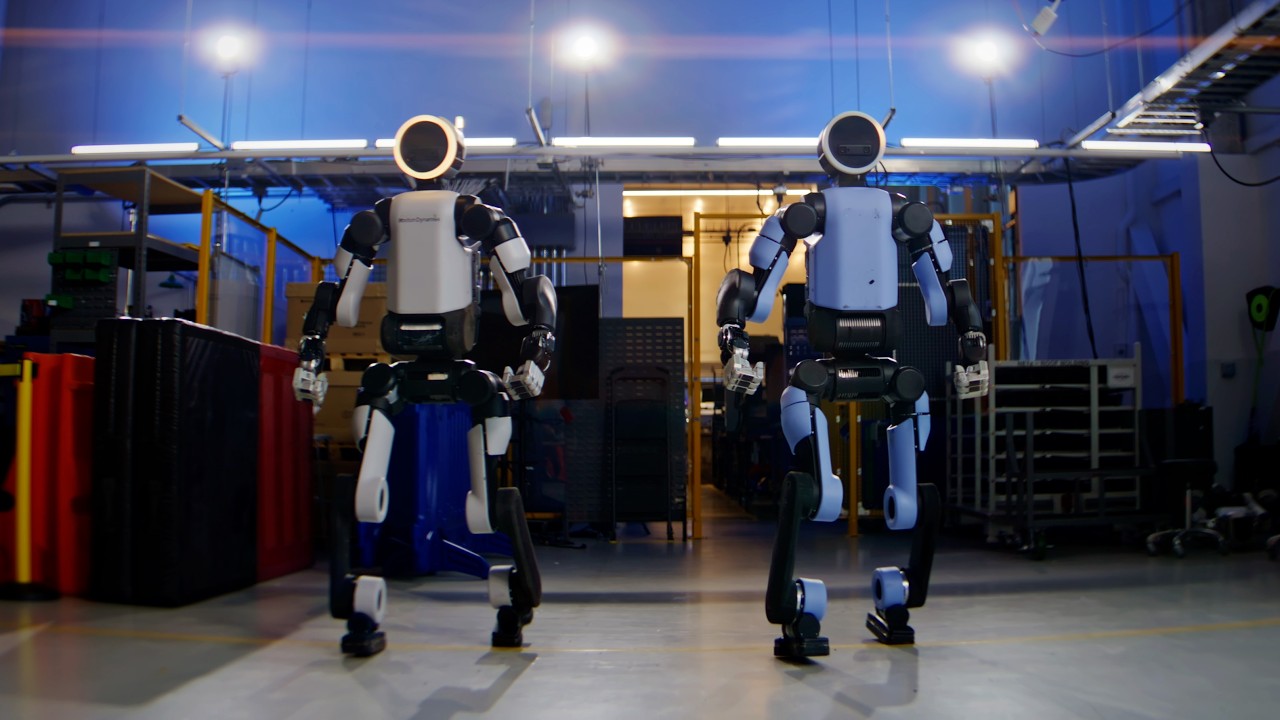
Unlike many other humanoid robots, Atlas’ first job will not be in the home, and much of the development work has been aimed at delivering a system that is low-cost, simple, reliable and can easily fill a manufacturing role. Perhaps that’s why, while Altas resembles the human form, she is much less so than, say, Neo Bot, Telsa Optimus, or Figure 03 of Figure AI. However, one could argue that its design makes the Atlas faster, more agile, and perhaps much better suited to delivering a heavy package from point A to point B.
In the video, Atlas picks up an unplugged 50-pound mini refrigerator and carries it to a table, where he gingerly places it before standing aside and watching the investigator retrieve a canned beverage. 50 pounds is significant, but researchers noted that in lab tests, Atlas effortlessly lifted 100 pounds. In both cases, the goal was a somewhat human effort. “A tool that is basically human-like, meaning it needs to start interacting with objects. And objects come in all shapes and forms,” says Vinay Kamidi, research engineer at Boston Dynamics Atlas.
Atlas doesn’t just lift the refrigerator. “The idea was to put your whole body into it,” says Boston Dynamics Atlas Controls associate director Benjamin Stephens.
Look
Getting Atlas to perform this skill smoothly is the product of prolonged and visualized training. The researchers start with an animation of the task and then, inside the computer, run “millions of hours” of simulations in which the robot practices lifting, carrying and placing the refrigerator.
When they ran the program on real Atlas hardware, it performed the task perfectly.
It’s curious to think that a robot that can perform a backflip, something relatively few humans can do, requires millions of simulated attempts to learn a task that a human could master in a few moments. However, AI is speeding up the simulation process, and Boston Dynamics researchers are not only excited about their current beverage delivery capabilities, but also what the future holds.
“We haven’t seen the limits of what Atlas can do,” says Atlas software engineer Shane Rozen-Levy in the video, and the future is “only limited by our imagination.”

Follow TechRadar on Google News and add us as a preferred source to receive news, reviews and opinions from our experts in your feeds.


