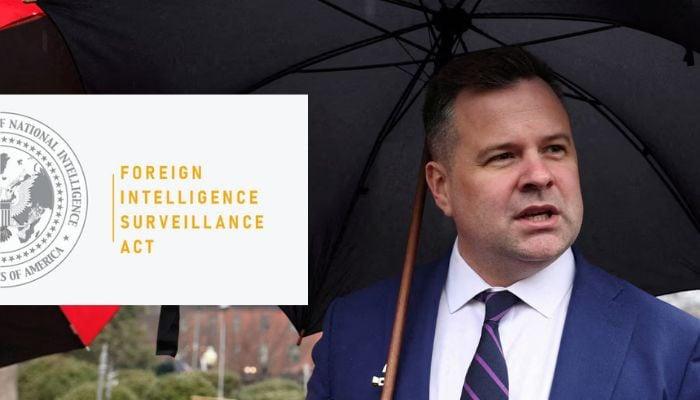
A key U.S. surveillance program that allows intelligence agencies to monitor foreign targets without obtaining individual court orders faces an uncertain future after Senate Democrats blocked efforts to move forward with its renewal.
The law in question is Section 702 of the Foreign Intelligence Surveillance Act (FISA), a provision first enacted in 2008 to assist U.S. intelligence agencies in collecting information on foreign persons located outside the United States.
The authority allows agencies such as the Federal Bureau of Investigation (FBI), the Central Intelligence Agency (CIA) and the National Security Agency (NSA) to collect communications from foreign targets through US-based telecommunications and Internet companies.
While the law prohibits intentionally targeting U.S. citizens or anyone located within the United States, critics have long argued that it can still capture the communications of Americans when they interact with foreign surveillance targets.
Those communications can then be searched by U.S. authorities without a traditional court warrant, raising concerns among privacy advocates and civil liberties groups.
The latest political dispute erupted after Senate Democrats, along with seven Republicans, voted to block debate on legislation that would have renewed surveillance authority for three years. The procedural vote failed by 52 votes in favor and 47 against, putting the future of the program in doubt just days before its scheduled expiration.
Why were Democrats opposed?
The opposition was largely fueled by President Donald Trump’s appointment of Bill Pulte as acting Director of National Intelligence (DNI), a position responsible for overseeing the US intelligence community.
Democrats argued that Pulte lacks national security experience and expressed concern that sensitive surveillance powers could be misused under his leadership.
Democratic lawmakers accused the Trump administration of putting a loyal politician in charge of intelligence operations.
They demanded that the appointment be withdrawn before supporting any extension of the surveillance program.
Some lawmakers warned that surveillance authority could potentially be used against Trump’s political opponents if sufficient safeguards are not in place.