His call came as Ugandan authorities confirmed on Saturday that there were three new cases of the Bundibugyo strain of the Ebola virus, which to date has no cure or vaccine.
“The three new cases include a Ugandan healthcare worker, a driver and a Congolese national who traveled from Ituri province in the neighboring Democratic Republic of the Congo (DRC) to receive medical care,” Tedros said in a social media post. “This brings to five the total number of people in Uganda who have tested positive for Ebola disease caused by the Bundibugyo virus.”
WHO is working with the Africa Centers for Disease Control and Prevention (Africa CDC) and partners in the Democratic Republic of the Congo and Uganda to contain the outbreak, support affected people and help coordinate the response. On Friday, the WHO raised the national risk assessment for the Democratic Republic of the Congo to “very high,” although the overall risk remains low.
Cross-border collaboration is essential
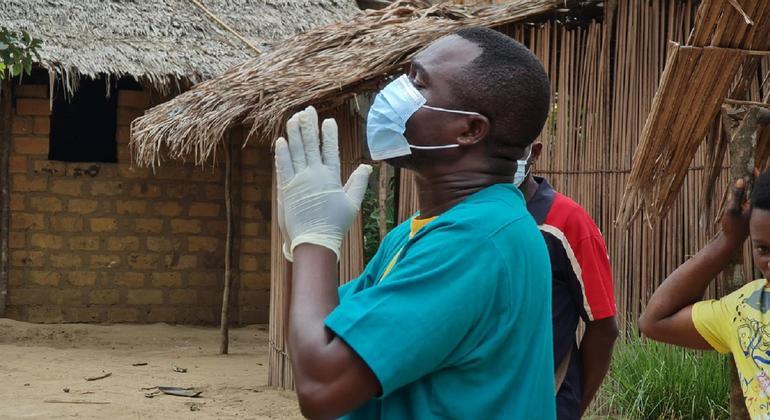
In Kampala, Uganda, WHO held a two-day high-level ministerial meeting on cross-border coordination in response to the Bundibugyo Ebola outbreak.
Addressing ministers from South Sudan, the Democratic Republic of the Congo and Uganda, Dr Marie Roseline Belizaire, Director of WHO Emergency Preparedness and Response in Africa, highlighted the need to strengthen and sustain cross-border collaboration to contain the outbreak.
He warned that delays in response can have serious consequences and emphasized that stronger surveillance and preparedness systems are essential because “time saves lives” during outbreaks.
Sustained financial contribution
The Director-General called on Member States to continue to increase assessed financial contributions to ensure that WHO remains strong, independent and able to respond to future global emergencies.
He also emphasized that global agreements must be translated into practical actions that protect communities, contain outbreaks quickly, and ensure health care reaches vulnerable populations.
“Every nation is healthier and safer when all nations are healthier and safer,” he said.