
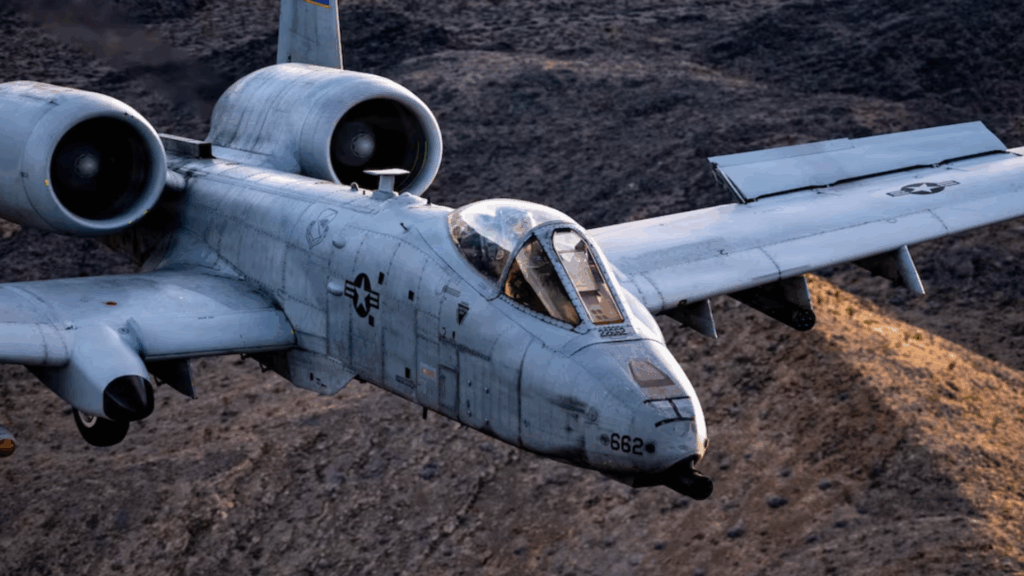
- The BRRRRT Law seeks to keep at least 126 A-10 operational
- Iran’s operations reignite debate over the military future of the A-10
- Future A-10 Retirees Face Stricter Certification Requirements Under New Legislation
A proposed House bill requires the US Air Force to retain at least 126 A-10 Thunderbolt II Warthogs, reversing plans to retire much of the nearly 50-year-old fleet of attack aircraft.
The legislation comes after renewed attention on the plane after its alleged involvement in operations linked to the recent confrontation with Iran, including combat search and rescue missions supporting downed F-15E crews.
Lawmakers backing the proposal argue that the plane should remain in service until a fully operational replacement is certified for each mission it currently flies.
Latest videos ofTechnologyRadar
Lawmakers push to preserve A-10 fleet
Officially called the Thunderbolt Act Reinforcement of Recognition, Resurgence, Retention and Remembrance Act, the legislation uses the acronym BRRRRT.
Introduced as HR 9780 by Representative Abe Hamadeh, the law takes its name from the distinctive sound produced by the A-10’s 30mm Gatling gun during firing.
“The A-10 has repeatedly proven itself on the battlefield, saving American lives and providing unparalleled close air support when our troops need it most,” Hamadeh said.
“The BRRRRT Act ensures that we do not retire a proven weapons system before a certified replacement exists.”
The proposal marks another chapter in a long-running disagreement between Congress and the Air Force over the future of the Warthog fleet and its specialized missions.
The Air Force entered fiscal year 2026 with 162 A-10 aircraft and requested authorization to retire the entire fleet.
However, Congress rejected that proposal and instead required the service to retain at least 103 aircraft.
The BRRRRT Act would increase that minimum inventory to 126 aircraft, requiring the Air Force to halt scheduled retirements and recover additional Warthogs from storage at Davis-Monthan Air Force Base in Arizona.
Following recent operational use, the Air Force announced that the A-10 squadrons at Moody Air Force Base in Georgia would remain active through 2029.
The service also plans to keep the Warthogs flying from Whiteman Air Force Base in Missouri through 2030, leaving approximately 54 aircraft assigned to three operational squadrons.
Bill Sets Tougher Conditions for Future A-10 Retirements
The legislation would give the Air Force 90 days after enactment to explain how maintenance, sustainment, pilot training, flight testing and depot operations would be restored.
Previous preparations for retirement already included closing the depot maintenance line at Hill Air Force Base in February and ending the final training class for new A-10 pilots in April.
The Weapons School course at Nellis Air Force Base has also been winding down as the service continues to prepare for the plane’s planned retirement.
The proposal would also make additional retirements more difficult by requiring the Secretary of Defense to certify that a replacement aircraft has entered full operational service.
That certification would also require written approval from the secretary of the Army, the commandant of the Marine Corps and the head of U.S. Special Operations Command.
The bill also states that assigning another aircraft the close air support mission as a secondary responsibility would not qualify as a replacement.
If the BRRRRT Act does not become law, similar language could still appear in annual defense authorization legislation that previously set the 103 aircraft minimum.
The Air Force maintains that the F-35A, F-15E and F-16 will eventually take over close air support and combat search and rescue missions from the A-10.
Supporters of the BRRRRT Act argue that those aircraft have not yet replaced all of the specialized capabilities performed by the Warthog.
Via Military Times
Follow TechRadar on Google News and add us as a preferred source to receive news, reviews and opinions from our experts in your feeds.


