
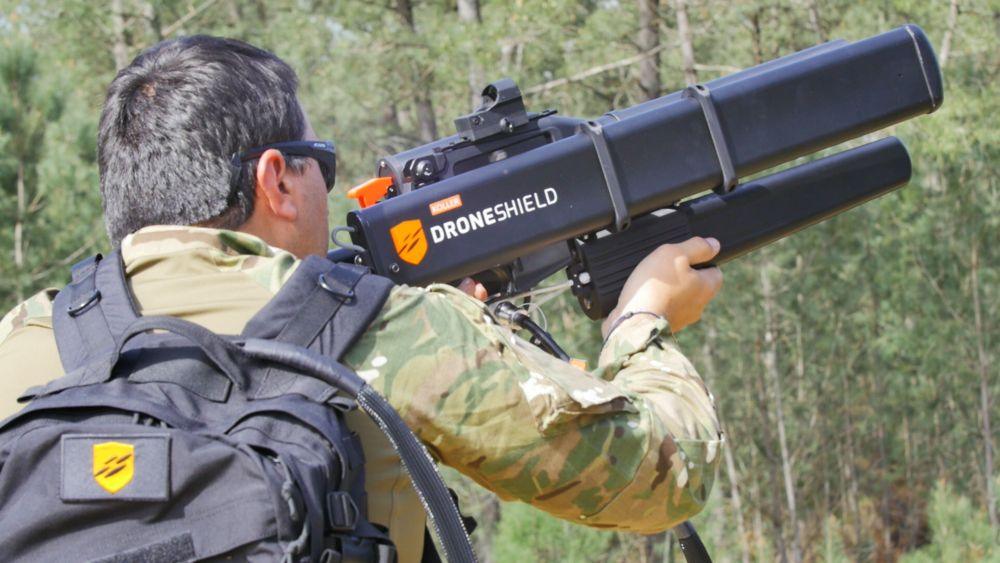
- Neuron Soundware’s Sound Shield turns sound into air defense by leveraging AI on existing technology
- It addresses concerns about the cost and footprint of modern radars by leveraging small, low-cost, energy-efficient “state-of-the-art” units.
- The solution itself is passive, making it invisible on the battlefield and easy to deploy in civilian areas without causing disruption.
The ongoing war in Ukraine and the conflict between the United States and Iran have changed the way modern warfare is perceived to play out in the future.
Drones are now an increasingly important offensive and defensive deployment, and the asymmetric warfare they offer is challenging to counter, given the large number of attack vectors and tactics at play for such UAVs.
Now, Czech startup Neuron Soundware believes it has an answer to what is emerging as one of the biggest threats to societies otherwise exposed to drone warfare: acoustics.

Focusing on sound as a means of defense
Modern drones come in all sizes and shapes, making it difficult for radar and air defense systems to detect some of the smaller ones and deal with large swarms that have been deadly in current conflicts.
They also offer the ability to disrupt or damage billions of dollars of hardware and infrastructure at a cost that is an order of magnitude less than anything else in a military’s arsenal.
Nowhere was this more visible than in Ukraine’s sophisticated Operation Spiderweb, in which Russia lost nearly $7 billion in military equipment thanks to surprise attacks by low-cost drones.
Modern radars and air defense are expensive and imperfect, leading EU leaders to search for a viable alternative. Neuron Soundware, a startup that focuses on artificial intelligence for listening to industrial hardware, could have a unique but promising solution.
The solution, called Sound Shield, focuses on identifying and locating drones by taking advantage of microphones connected to small sensors it calls nEdge Minis. All of these would report to a computing platform powered by Nvidia’s Jetson modules, which, if it detected a threat, would report to a centralized platform.
Unlike modern radar, which would require much more expensive deployments and would essentially “announce” itself every time it sweeps, nEdge minis consume just 1W of power and cost just €100-€150 each, allowing for a silent, energy-efficient but accurate detection tool.
Neuron Soundware also presents it as a dual-use system, suggesting it could be deployed near electrical transformer stations to monitor both drones and electronic hardware at those facilities.
“We can deploy our nEdge units in so-called dual-use mode,” said Pavel Konečný, founder and CEO of Neuron Soundware. “Primarily, they can continuously monitor the status of the transformer itself and other critical components of the distribution network, detecting internal discharges, oil leaks or other operational anomalies.”
“At the same time, their microphones listen to the sky. This would reduce the number of nEdge Mini units needed. In this way, the State would obtain a comprehensive air defense network that detects drones with minimal additional installation and energy costs.”
With modern warfare becoming increasingly asymmetrical and unconventional, potentially effective solutions like Sound Shield could be the answer to smaller, smarter drones that often come with stealth technologies built in, simply due to one key limitation they seem unable to address: a noisy motor.

Follow TechRadar on Google News and add us as a preferred source to receive news, reviews and opinions from our experts in your feeds.


