
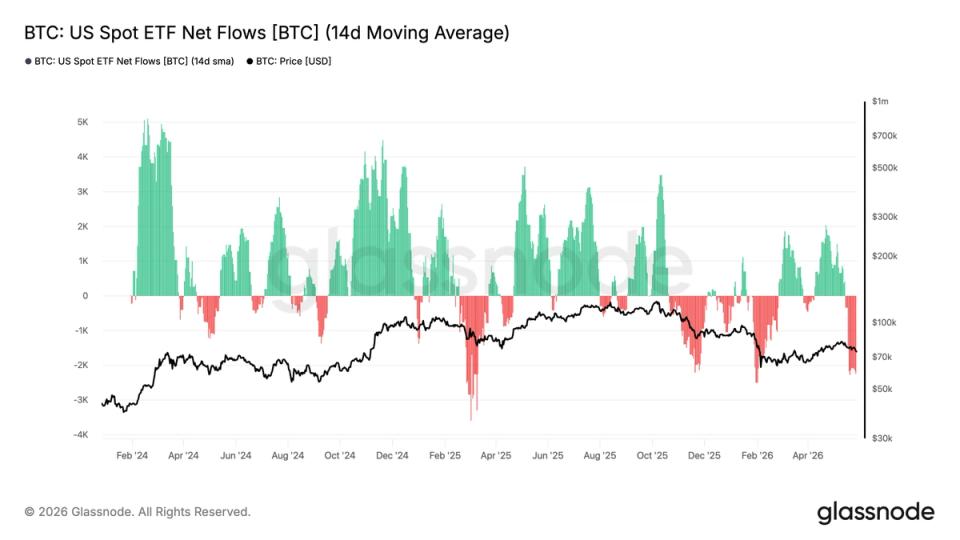
US spot bitcoin ETFs have recorded nine consecutive trading days of net outflows, marking the longest streak of withdrawals since products listed in January 2024. Data from SoSoValue
Over the nine sessions, investors withdrew approximately $2.8 billion from funds, surpassing any previous period of sustained selling pressure.
U.S. spot bitcoin ETFs have lost about $1.3 billion this week, extending a three-week streak of net outflows, according to data tracked by SoSoValue. Monthly withdrawals now amount to approximately $2.3 billion.
The outflows have coincided with a sharp decline in bitcoin, which has fallen from approximately $80,000 to $73,000 during the period. However, the broader context extends beyond bitcoin’s price action itself. Since the beginning of the year, bitcoin has lagged many of the market’s best-performing assets, particularly AI-related stocks, semiconductor stocks and memory chips, which have continued to attract capital amid growing enthusiasm around AI infrastructure spending.
Signs of institutional selling have also emerged beneath the surface. BlackRock’s iShares Bitcoin Trust (IBIT) recorded its largest single-day outflow since its launch earlier this week, largely driven by a major dark fund transaction. While the precise motivation behind the operation is unknown, the scale of the bailout suggests that some investors may be reallocating capital from bitcoin exposure toward sectors that have recently generated stronger returns.
Sustained ETF outflows have often historically coincided with periods of market stress that then turned into local lows. Glassnode data shows that the 14-day moving average of ETF flows tends to fall near significant inflection points. Similar patterns emerged during the correction in early February, when bitcoin briefly fell to $60,000, and again in November, when ETF outflows accelerated around the subsequent pullback to bitcoin’s all-time high and local low near $85,000.


