
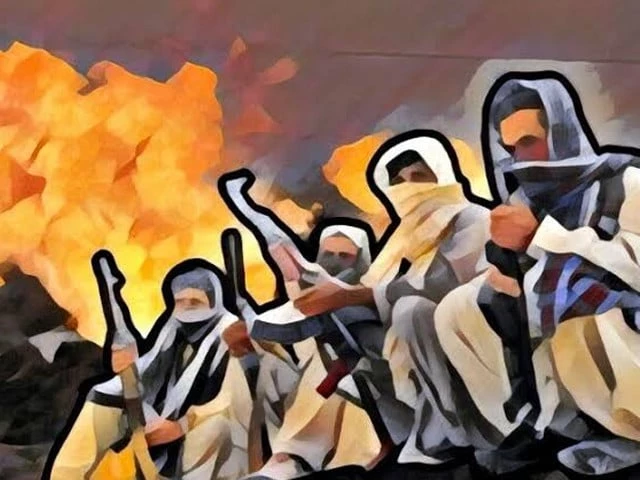
The recent operational history, the change in tactics and the regional politics around it point to something that most coverage overlooks.
Terrorism in Balochistan shows how an armed separatist movement crumbles over time. For more than twenty years, Pakistan’s largest province has lived in low-intensity conflict: scattered violence, a constant separatist message, and long periods of uneasy quiet. The recent operational history, the change in tactics and the regional politics surrounding it point to something that most coverage overlooks. Militancy, led mainly by Fitna Al Hindustan (BLA), is not growing. He’s losing.
Start with a change in who attacks Fitna Al Hindustan. Insurgencies in their early stages tend to attack crowded public places to sow fear, gain headlines, and appear bigger than they are. The usual reading of counterinsurgency is that a group, as it matures and holds firm, moves in the opposite direction, toward difficult military targets, to demonstrate that it can challenge the state while keeping the local population on its side.
In recent months, Fitna Al Hindustan has moved away from hard military targets and toward soft civilian targets, killing unarmed people, including women and children. That indicates weakness, not strength.
When a group can no longer get through a secure military perimeter, they turn to civilians just to stay in the news. The main objective, “dividing Pakistan”, has failed, and with no real political or military route left, the leaders organize violence to appear dangerous. It needs that appearance to cling to its lobbying networks abroad and attract recruits.
The losses on the ground fit this picture. In early 2026, the Pakistani Armed Forces carried out Operation Radd-ul-Fitna-1, an intelligence-led raid against coordinated attacks in twelve locations. In a short period, security forces killed 216 active militants and cut the group’s mid-level command. Estimates of BLA personnel vary widely, with some assessments putting it at a few thousand, while estimates from the US National Counterterrorism Center (NCTC) suggest a range of approximately 2,000 to 3,000 fighters. Independent estimates put the BLA’s losses at approximately 40 to 50 percent of its active fighters in about four months. For a terrorist network, attrition at that rate is almost fatal.
This highlights the structural failure of the long-term proxy project. For twenty years, subnational militancy in Balochistan has enjoyed significant external sponsorship, sophisticated cross-border logistical corridors, and sophisticated global media operations designed to mainstream its narrative. However, despite two decades of uninterrupted funding, the geopolitical return on investment for the project’s external architects is effectively non-existent. Not a single square centimeter of Pakistani territory has been separated from the state. More importantly, there remains no “no-go zone” within the province where security forces cannot routinely establish an operational domain.
By any standard view, an insurgency that takes no territory, builds no administrative control, and gains no popular base after twenty years of strong external support has failed. That failure is now the sponsors’ problem. With senior intelligence officials in New Delhi, including Ajit Doval, near the end of their careers and nothing to show for Balochistan politics, the BLA and allied factions like Fitna al-Khawarij have become costly and unhelpful. The demand for dramatic, high-casualty attacks has less to do with gaining traction than with giving those running them a way to save face after years of failed spending.
With the political goal out of reach, sponsors have changed what they aim for. “Independence” is gone, so the task has shifted from dividing the country to simply damaging its economy. The goal is now limited to disruption: hitting economic sites, supply lines and cities that serve as economic nodes. By keeping the sense of danger alive, managers hope to scare away foreign investment, slow down infrastructure work in the China-Pakistan Economic Corridor and keep Balochistan out of the broader maritime economy.
This setback will probably end in the same way as the “failure of the Pakistan project” did. The human cost of the attacks is real and painful, and it is worth saying clearly. But the direction is not in doubt. Terrorism in Balochistan is in structural decline. The shift toward civilian targets, the collapse of manpower, and the slide toward economic sabotage are not signs of a rising insurgency. This is what a failed proxy operation looks like when it comes to an end.
Ahmad Hassan Al Arbi is an international relations analyst specializing in counterterrorism studies, psychological operations and foreign policy analysis. His work examines the intersection of insurgency dynamics, strategic communication, and regional security architecture.


