
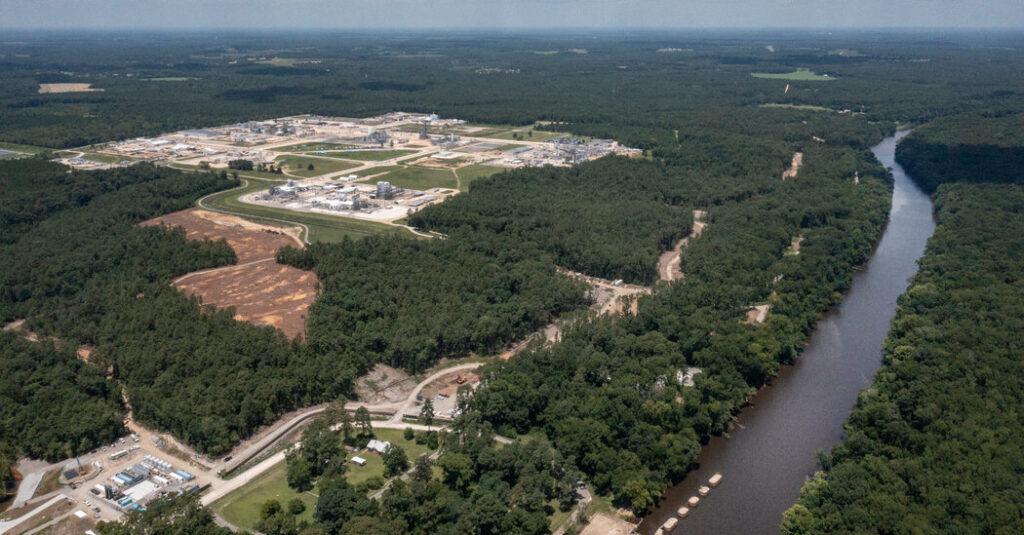
The Trump administration is taking steps to resolve a landmark case with chemical giant Chemours over its years-long illegal dumping of PFAS, “forever chemicals,” in three states. The $480 million settlement would be the federal government’s first to resolve pollution lawsuits against a maker of chemicals, which have been linked to cancer and other health risks.
The proposed agreement, released Wednesday, was immediately attacked by North Carolina, which said it did nothing to clean up water contaminated by the chemicals. Several environmental groups also called the agreement inadequate.
For decades, Chemours facilities in West Virginia, New Jersey and North Carolina illegally released chemicals into major waterways, including the Ohio, Cape Fear and Delaware rivers. Widespread contamination from Chemours, which was spun off from Dupont in 2015, came to light after the Environmental Protection Agency and independent scientists began detecting high levels of PFAS, particularly in the Cape Fear River.
PFAS, a class of synthetic chemicals remarkably resistant to water and grease, are used in everyday items such as nonstick pans, water-repellent clothing, and stain-resistant carpets, as well as in firefighting foam and cosmetics.
But exposure to these chemicals, which are not easily broken down in the body, have been linked to serious, adverse health risks. These include low birth weight, birth defects and developmental delays, as well as an increased risk of some kidney and testicular cancers.
Under the proposed settlement, Chemours will pay a $22.5 million civil penalty for illegally discharging PFAS from plants in North Carolina, New Jersey and West Virginia.
Chemours will also spend $337 million to bring its facilities into compliance with the law and to test and provide drinking water to communities near its plants in West Virginia and New Jersey. And it will pay $90 million over a 15-year period to further reduce PFAS emissions and treat drinking water.
“This first comprehensive federal settlement against a major PFAS manufacturer delivers on the Trump Administration’s promise to make polluters pay and stop PFAS pollution at the source,” said Jeffrey A. Hall, assistant administrator of EPA’s Office of Enforcement.
Gov. Patrick Morrisey of West Virginia, who is a party to the agreement, called it an encouraging first step. New Jersey did not comment on the federal settlement. The state has sought its own settlement against Chemours.
Chemours disputed the EPA’s claims that PFAS harm human health and did not admit liability, although it accepted the overall settlement.
North Carolina denounced the deal, calling it a “behind-the-scenes deal” that allocated virtually nothing to the state. Fayetteville Works, a chemical plant on the banks of the Cape Fear River, was Chemours’ hub for manufacturing GenX, a synthetic chemical that was intended to replace PFAS, but which itself has raised health concerns.
“This agreement is an insult to the people of eastern North Carolina,” state Attorney General Jeff Jackson said in a statement. “This deal does virtually nothing to clean up our water. Chemours made this mess and Chemours should clean it up. The EPA will hear from my office.”
Corinne Bell, senior attorney for the Natural Resources Defense Council, called the deal inadequate, particularly coming from a corporation that reported $1.4 billion in net sales in its first quarter. “The damage caused to our water supply and our health by these ‘forever chemicals’ is enormous, and the penalty should have reflected that,” he said. “This agreement is not a serious effort by a polluting company to clean up its damage.”
Local groups also expressed separate concerns about the proposed deal.
For example, the agreement lays out how Chemours must handle hazardous chemicals still being manufactured at its Fayetteville Works plant in North Carolina. But it doesn’t include enough identifying details about the chemicals for the public to properly evaluate the plan, said Emily Donovan, co-founder of Clean Cape Fear, a grassroots coalition working to secure drinking water for communities in the river basin.
“The downstream community cannot weigh a hidden risk,” he said.
The proposed deal must go through a public comment period and be officially approved by a federal judge before it becomes legally binding.
Jessica Loizeaux, a spokeswoman for Chemours, said the deal included hiring an EPA-approved third-party auditor to review manufacturing processes at its plants and determine whether additional measures were needed to control contamination. Fayetteville Works had invested more than $400 million in recent years to reduce its PFAS emissions and ran a private well testing program to help ensure residents with private wells had access to safe water, he said.
The EPA referred questions to the Justice Department, which did not immediately respond.
The Trump administration has been criticized for repealing some Biden-era limits on PFAS in drinking water, including limits on GenX, which would take effect in the coming years. Lee Zeldin, the EPA administrator, has tried to counter anger over the measure, announcing nearly $1 billion to help states address pollution.


