
ISLAMABAD/CHILAS:
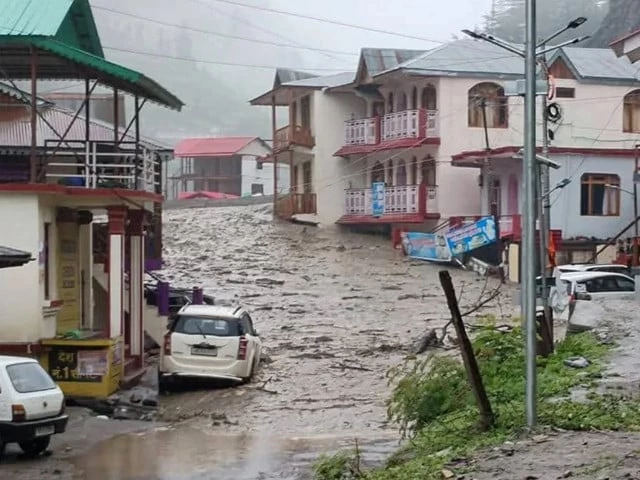
A heavy downpour unleashed devastating flash floods in Gilgit-Baltistan’s Thor Valley in Diamer district, washing away houses, orchards, standing crops, bridges and vehicles, severing road connections and stranding affected communities as national disaster authorities warned of increased risk of flooding from glacial lake outbursts (Glofs) in the country’s northern mountainous regions.
The floods, triggered by torrential rains on Friday, caused widespread destruction in several parts of the valley.
Authorities said damaged roads have complicated rescue efforts, while residents called for immediate help, compensation and a comprehensive assessment of losses.
According to police, floods covered much of the Thor Valley, washing away houses, orchards, cultivated land, link bridges and vehicles.
The flood also reached Wapda colony and caused extensive damage to buildings, roads and other infrastructure.
Police said the main road connecting Thor Valley had been blocked in several places, cutting off a large population from the rest of the district and making relief operations increasingly difficult.
Flood victims urged the government to launch immediate relief operations, assess losses and provide financial assistance to affected families.
One resident said: “I have suffered huge losses and even my gold has been washed away.”
Diamer Deputy Director of Disaster Management Imtiaz Ahmed said efforts were underway to restore access to roads and deliver relief supplies to affected areas.
He said relief operations and road restoration had already begun, but blocked routes were creating serious challenges for rescue teams and aid workers.
The local administration said it was continually monitoring the situation and working to restore access to isolated communities as quickly as possible.
The disaster occurred when the National Disaster Management Authority (NDMA), through its National Emergency Operations Center (NEOC), issued a fresh alert warning of elevated risk of glacial lake flash floods and flash floods between June 27 and July 3 in Gilgit-Baltistan, Khyber Pakhtunkhwa and Azad Jammu and Kashmir.
According to the advisory, prolonged high temperatures combined with expected precipitation are expected to accelerate the melting of glaciers, increasing water flow in mountain rivers and streams.
Authorities warned that rapid melting of glaciers could cause a sudden rise in river levels, while increased pressure on glacial lakes could cause flash floods, flash floods, landslides and landslides in glacial lakes.
The alert identified Hunza, Nagar, Ghizer, Skardu, Shigar, Ghanche, Kharmang, Astore, Diamer, Upper and Lower Chitral, Swat and adjacent mountainous regions as particularly vulnerable.
The Pakistan Meteorological Department (PMD) also warned that rising temperatures are likely to persist until the first week of July, substantially accelerating the melting of snow and glaciers across northern Pakistan.
“This significant warming will substantially accelerate the melting of snow and ice in glacial valleys in these regions,” the Met Office said.
It warned that river flows would remain unusually high, existing glacial lakes could expand rapidly and new glacial lakes could form due to rising meltwater.
The PMD further warned that the expansion of glacial lakes could destabilize natural ice or moraine dams, which could trigger incidents in Glof, while strong mudflows, debris flows and landslides could also occur in steep mountainous terrain.
The department advised residents, tourists and travelers to avoid the banks of rivers, streams, glacial lakes and mountain nullahs, refrain from camping or hiking near vulnerable water channels and avoid unstable slopes where melting snow could trigger landslides.
Similarly, the NDMA advised people to avoid unnecessary movements near rivers, streams and glacial lakes, follow official weather advisories before traveling to mountainous areas and immediately report any sudden rise in water levels, unusual changes in water color or abnormal sounds from glaciers to relevant authorities.
The authority warned that flash flooding and landslides could damage roads, bridges, irrigation systems and other critical infrastructure, while temporary road closures and flooding in low-lying settlements remained possible.
The NDMA directed all relevant departments to maintain continuous monitoring of glaciers, glacial lakes, rivers and climatic conditions.
Following the PMD advisory, the Khyber Pakhtunkhwa Provincial Disaster Management Authority (PDMA) directed deputy commissioners in Upper and Lower Chitral, Upper Dir, Swat, Upper and Lower Kohistan and Mansehra to carry out proactive monitoring of vulnerable sites.
District administrations were ordered to conduct evacuation drills, prepare emergency shelters, launch public awareness campaigns and warn residents living in low-lying areas about potential dangers.
The PDMA also directed local authorities to coordinate with the National Highways Authority (NHA), Frontier Works Organization (FWO) and the Department of Communications and Works to ensure timely restoration of roads and bridges in case of flood damage.
Authorities have been ordered to take all necessary precautionary measures to minimize the loss of life, livestock, crops and infrastructure as temperatures continue to fuel melting glaciers in the country’s northern mountains.


