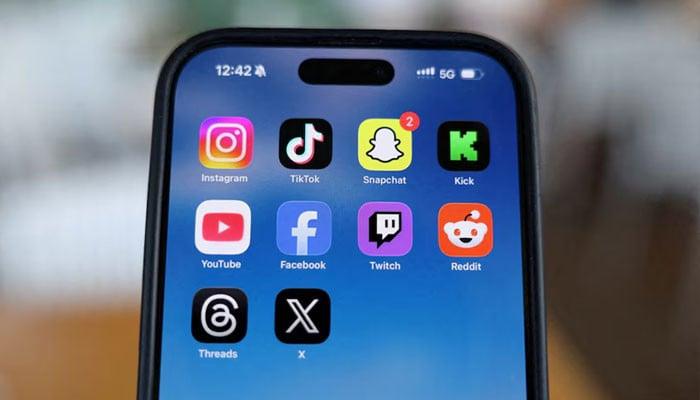
ISLAMABAD: The federal government has proposed a 5% withholding tax on income earned by social media influencers on platforms such as YouTube, Facebook, Instagram and TikTok.
Under the Finance Bill 2026, all banking and non-banking financial institutions will be required to deduct tax at the time of credit or receipt of any amount in an account where the amount represents income received from social media platforms.
According to the proposal, a 5% tax deduction will be applied to income received by resident individuals who are active taxpayers. Non-residents who receive income through these platforms will also be subject to a 5% withholding tax.
The Finance Bill 2026 defines a social media influencer as any individual or entity that earns income through a social media platform.
It also points out that payments may be made through national remittances, transfers or account credits. The proposed tax will constitute the minimum tax obligation for resident persons.
For non-residents who do not have a permanent establishment in Pakistan, the withholding tax deducted will be treated as a final tax, according to the bill.
Finance Minister Muhammad Aurangzeb on Friday presented a budget with a total outlay of Rs 18,771 billion as the federal government tries to balance a fragile economic situation due to an energy crisis amid tensions in the Middle East.
Presenting the third budget of his tenure in the National Assembly, the Finance Minister said: “This budget is presented at a time when Pakistan has achieved the status, in the eyes of its people and the world, as a country whose voice is heard and whose friendship is desired.”
Breaking down the planned budget of Rs 18,771 billion, the Finance Minister said the largest portion (Rs 8,054 trillion) has been allocated for margin payments, followed by Rs 3 trillion for defense and Rs 1 trillion for the federal development programme.