
ISLAMABAD:
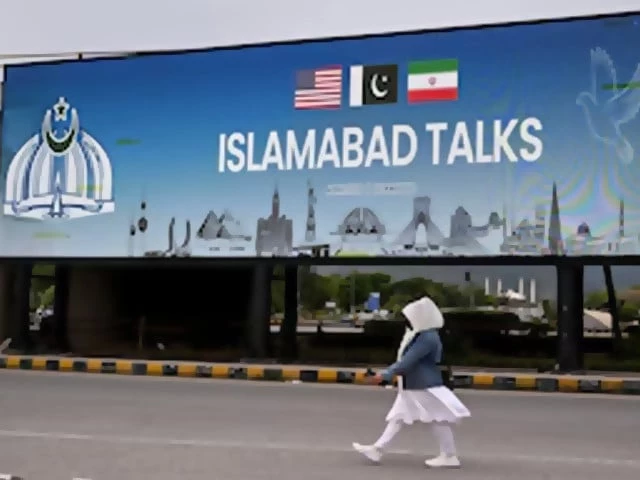
Prime Minister Shehbaz Sharif had a telephone conversation with European Council President Antonio Costa on Monday. Both leaders expressed hope for progress in the anticipated talks between Iran and the United States expected to be held in Islamabad.
According to an official statement, the two leaders exchanged views on regional developments, particularly diplomatic efforts aimed at easing tensions between Tehran and Washington.
The Prime Minister briefed Costa on Pakistan’s ongoing outreach and facilitation efforts to bring the two sides to the negotiating table.
Costa appreciated Pakistan’s constructive role in promoting dialogue and stability and noted that the European Union was ready to support all efforts aimed at reducing tensions.
He stressed that the “world is watching with bated breath” the next round of talks and expressed hope that an agreement will be reached to help stabilize the region and ensure the reopening of key sea routes, including the Strait of Hormuz.
The Prime Minister thanked the EU leaders for their support and reiterated Pakistan’s commitment to diplomacy as the preferred way to resolve conflicts. Both leaders agreed to remain in close contact as events unfold.
Earlier, Prime Minister Shehbaz Sharif chaired a high-level consultative meeting to review the country’s diplomatic stance amid rapidly changing regional dynamics. The meeting was attended by External Affairs Minister Ishaq Dar, Home Minister Mohsin Naqvi and other senior officials.
The sources said the meeting expressed satisfaction over preparations related to facilitating the next phase of dialogue between Iran and the United States, even as concerns were raised about Iran’s alleged reluctance to participate in the proposed round of talks.
The participants carried out a detailed review of the situation arising from Tehran’s position and assessed its possible implications for regional stability. The meeting also focused on the broader security environment, with particular attention to rising tensions in the Middle East.
Interior Minister Mohsin Naqvi briefed the Prime Minister on his recent interactions with the American and Iranian envoys, sharing insights on the positions and expectations of both sides.
According to sources, Pakistan reaffirmed its determination to ensure that the US-Iran dialogue continues, emphasizing that sustained diplomatic engagement remains essential for peace.
It was agreed that efforts would be intensified to persuade Iran to return to the negotiating table, while maintaining open channels with all interested parties.
The participants stressed that Pakistan will continue to play a “positive and constructive role” in promoting peace and stability in the region, leveraging its diplomatic relations with both sides.
On the other hand, Deputy Prime Minister Ishaq Dar had a telephone conversation with his Iranian counterpart, Abbas Araghchi, during which he highlighted the importance of continued engagement and an early resumption of dialogue with the United States.
According to the Ministry of Foreign Affairs, Dar emphasized that all outstanding issues must be addressed through diplomacy to promote regional peace and stability. Both sides agreed to continue to collaborate closely and continue consultations on developments.
In parallel, Dar also received recognition from his international counterparts, including Australia’s foreign minister, for Pakistan’s role in facilitating the dialogue.
The officials said Pakistan has become a key intermediary in ongoing efforts to bridge differences between Washington and Tehran. Islamabad is preparing to host the next round of talks, with indications that a high-level US delegation could participate.
While previous discussions highlighted deep disagreements over sanctions, maritime security and regional influence, diplomatic sources say both sides have so far kept communication channels open.
Analysts note that Pakistan’s positioning as an “honest broker” reflects its growing diplomatic commitment at a critical time.
With global attention focused on Islamabad, the success of the upcoming talks could have far-reaching implications not only for regional peace but also for international economic stability.


